In 2023, the field of Artificial Intelligence (AI) witnessed significant changes and transformative trends. These trends have reshaped the landscape of AI technology and its applications. From the explosive growth of generative AI tools to the emergence of AI-powered cybersecurity, these trends have had a profound impact on the AI sector. Let’s explore the four key trends that have changed AI in 2023.
Key Takeaways:
- Generative AI gained significant traction in 2023, enabling content generation, product design, and data augmentation.
- UX-driven AI has enhanced user experiences through personalization, predictive analytics, and search and navigation.
- AI assistants have improved customer support, translation services, and virtual meetings.
- AI in healthcare has advanced diagnosis, personalized medicine, and drug discovery.
- Computer vision has revolutionized industries such as agriculture, autonomous vehicles, and environmental monitoring.
Generative AI
Generative AI is revolutionizing content creation in diverse industries. This class of AI systems has the remarkable ability to generate human-like content, including text, images, and audio. In 2023, the world witnessed a surge in the popularity of generative AI with the introduction of OpenAI’s ChatGPT and similar models, unleashing a wave of creativity.
Business sectors such as content generation, product design, and data augmentation have experienced the transformative power of generative AI. Companies can now effortlessly produce large volumes of compelling content for marketing campaigns and social media platforms. By eliminating the need for manual content creation, generative AI streamlines workflows and saves precious time and resources.
| Industry | Impact of Generative AI |
|---|---|
| Content Generation | Effortlessly generate vast amounts of engaging content for marketing and social media purposes. |
| Product Design | Assist designers and engineers in ideation, prototyping, and exploring innovative concepts. |
| Data Augmentation | Create synthetic data to enhance machine learning models and improve data analysis. |
However, the rise of generative AI also raises ethical concerns. The potential misuse of these tools to generate fake content calls for responsible use and regulation. It is crucial to establish guidelines and frameworks that govern the appropriate and ethical use of generative AI. Striking a balance between innovation and responsible application will ensure the long-term benefits of this groundbreaking technology.
Generative AI opens up exciting possibilities for content creation, product design, and data augmentation. However, it is important to address the ethical implications and ensure its responsible use and regulation.
UX-Driven AI
In the digital age, providing an exceptional user experience (UX) is crucial for businesses to thrive. That’s where UX-driven AI comes into play. This innovative approach utilizes artificial intelligence (AI) technologies and algorithms to enhance the user experience in digital products and services. By leveraging AI capabilities, businesses can create more intuitive, user-friendly, and personalized experiences for their customers.
In 2023, the adoption of UX-driven AI skyrocketed as businesses recognized the immense value it brings. From personalization to predictive analytics and search and navigation, the impact of UX-driven AI spans various aspects of business operations.
Personalization
Personalization is no longer a luxury but a necessity in today’s competitive marketplace. With UX-driven AI, businesses can analyze user behavior and preferences to deliver personalized content and recommendations. By tailoring offerings based on individual needs, businesses can create meaningful connections with their customers and enhance customer satisfaction and loyalty.
Predictive Analytics
Predictive analytics is a powerful tool that can help businesses anticipate user behavior and preferences. By analyzing data collected through UX-driven AI, businesses can gain valuable insights that enable them to make informed decisions and develop targeted strategies. This data-driven approach empowers businesses to stay one step ahead and provide users with the experiences they desire.
Search and Navigation
Efficient search and navigation are essential for users to find what they are looking for quickly and easily. UX-driven AI can improve search engine results by understanding user intent and delivering more relevant and accurate search results. Additionally, AI-powered navigation systems can provide intuitive user interfaces and guide users through complex digital environments, ensuring a seamless and intuitive user experience.
As businesses continue to embrace UX-driven AI, they unlock the potential to create intuitive, personalized, and seamless user experiences. The combination of AI technologies and user-centric design principles is revolutionizing the way businesses connect with their customers and drive success in the digital world.
AI Assistants
In 2023, the rise of AI assistants revolutionized the way businesses interacted with their customers. Developed using cutting-edge artificial intelligence technology, AI assistants emerged as reliable and efficient tools for enhancing customer support, improving operational efficiency, and delivering exceptional user experiences.
AI assistants, such as chatbots and virtual assistants, are software programs capable of performing a wide range of tasks and providing information through natural language conversations. Leveraging the power of AI, these assistants demonstrate remarkable language understanding and processing capabilities.
One of the key areas where AI assistants have made a significant impact is customer support. These chatbots and virtual assistants act as round-the-clock support agents, handling routine inquiries, answering frequently asked questions, and routing complex issues to human agents when necessary. This not only ensures quick and efficient responses to customer queries but also frees up valuable human resources for more critical and complex tasks.
AI assistants have also been integrated into translation services, facilitating seamless global communication. By leveraging AI’s language processing capabilities, these assistants enable efficient and accurate translation, breaking down language barriers and fostering collaboration across borders.
Furthermore, AI assistants have played a crucial role in virtual meeting support. They assist in organizing and scheduling meetings, handling administrative tasks, and even providing real-time language translation during multinational video conferences. These features have greatly enhanced remote collaboration, making global communication more effective and inclusive.
Overall, AI assistants have transformed the way businesses approach customer support, communication, and collaboration. Their ability to understand and respond to natural language, coupled with their around-the-clock availability, has made them invaluable tools. With further advancements in AI technology, we can expect AI assistants to continue evolving and delivering even more personalized and efficient experiences in the years to come.
Let’s take a look at the table below to understand the key benefits and applications of AI assistants:
| Benefits of AI Assistants | Applications of AI Assistants |
|---|---|
| 24/7 availability for customer support | Customer support and helpdesk |
| Efficient handling of routine inquiries | Translation services |
| Quick and accurate response to FAQs | Virtual meeting support |
| Seamless routing of complex issues to human agents | |
| Enhanced remote collaboration |
As evident from the table, AI assistants offer numerous benefits across different applications, making them indispensable tools for businesses in the era of AI-driven customer support and communication.
AI Healthcare
In 2023, AI made significant advancements in the healthcare industry, revolutionizing patient care, accelerating medical research, and optimizing processes. The integration of AI in healthcare has been particularly noteworthy in three key areas:
1. Diagnosis and Medical Imaging
AI has proven to be a valuable assistant in medical diagnostics by analyzing various types of medical images, including X-rays, MRIs, and CT scans. With its ability to detect patterns and anomalies that may be difficult for human eyes to identify, AI technology can aid in the early detection of diseases, such as cancer and cardiovascular conditions.
2. Personalized Medicine
AI’s capacity to analyze vast amounts of patient data, including genetics and medical history, enables the development of personalized treatment plans. By considering individual variations in patients, AI can help healthcare professionals tailor treatments, medications, and therapies to maximize efficacy and minimize adverse effects.
3. Drug Discovery and Development
In the field of pharmaceuticals, AI has played a pivotal role in accelerating drug discovery and development processes. By leveraging machine learning algorithms, AI can analyze extensive datasets, identify potential drug candidates, and predict their efficacy and safety profiles. This expedited approach has the potential to revolutionize the pharmaceutical industry, bringing new treatments to patients more rapidly.
The applications of AI in healthcare are vast, with numerous benefits for both patients and healthcare providers. However, the ethical implications and data privacy concerns surrounding AI adoption in healthcare must also be carefully addressed to ensure responsible and secure implementation.
Key Benefits of AI in Healthcare:
- Improved accuracy and efficiency in medical diagnostics
- Personalized treatment plans based on individual patient data
- Expedited drug discovery and development processes
- Enhanced patient outcomes and quality of care
- Streamlined healthcare operations and processes
| Application | Advantages |
|---|---|
| Diagnosis and Medical Imaging |
|
| Personalized Medicine |
|
| Drug Discovery and Development |
|
Computer Vision
Computer vision, a subfield of AI, focuses on enabling computers to interpret and understand the visual world. In 2023, computer vision played a crucial role in various industries, revolutionizing the way businesses operate and making a significant impact on key sectors.

In the field of agriculture, computer vision has proven to be a game-changer. By using advanced image processing techniques, AI-powered systems can monitor crop health, detect diseases, and optimize irrigation. This technology not only improves efficiency and reduces losses but also promotes sustainable farming practices.
Autonomous vehicles have also benefited greatly from computer vision. AI algorithms analyze real-time visual data from cameras and sensors to navigate roads, identify objects, and detect potential obstacles. By enhancing safety and enabling precise maneuvering, computer vision is driving the development of self-driving cars and paving the way for the future of transportation.
“Computer vision has opened up new possibilities for businesses across various sectors.” – Dr. Emily Adams, AI Researcher
Environmental monitoring is another area where computer vision has proved invaluable. By analyzing images and videos captured by drones and satellites, AI can track wildlife populations, monitor changes in ecosystems, and even predict natural disasters. This technology assists in preserving biodiversity, understanding climate patterns, and making informed decisions for a more sustainable world.
The impact of computer vision in these sectors is far-reaching. Increased efficiency and accuracy in agricultural practices lead to improved crop yields and reduced resource wastage. In autonomous vehicles, computer vision technology contributes to safer roads and the realization of fully autonomous transportation systems. In environmental monitoring, computer vision opens up avenues for proactive and data-driven conservation efforts.
Computer Vision Applications in Key Sectors
| Industry | Applications |
|---|---|
| Agriculture |
|
| Autonomous Vehicles |
|
| Environmental Monitoring |
|
As computer vision continues to advance, we can expect even greater breakthroughs in AI-powered visual understanding. From improving farming practices and revolutionizing transportation to safeguarding our environment, computer vision is paving the way for a smart and sustainable future.
AI-Powered Cybersecurity
As cyber threats continue to evolve and become more sophisticated, businesses have recognized the need for advanced security measures to protect their digital assets, data, and networks. AI-powered cybersecurity has emerged as a vital trend in 2023, leveraging the power of artificial intelligence and machine learning to bolster defense mechanisms against cyber attacks.
Using AI in threat detection and prevention, organizations can significantly improve their ability to identify malicious activities and stop potential threats in their tracks. AI algorithms can analyze vast amounts of data in real-time, detecting patterns and anomalies that may indicate a cyber breach or an impending attack.
Furthermore, AI in real-time response enables immediate action to counter security incidents. AI-powered systems can automatically generate responses and deploy countermeasures, minimizing the impact of cyber attacks and reducing response time from hours or days to mere seconds.
One of the significant advantages of AI-powered cybersecurity is scalability. Traditional security measures often struggle to keep pace with the ever-expanding volume and complexity of digital landscapes. With AI, organizations can scale their cybersecurity capabilities efficiently. AI algorithms can learn from new threats and adapt to emerging attack techniques, ensuring robust protection even in large and complex IT environments.
AI-powered cybersecurity solutions have revolutionized the way organizations detect, prevent, and respond to cyber threats. By harnessing the capabilities of AI and machine learning, businesses can enhance their security posture, safeguard sensitive information, and stay one step ahead of cybercriminals.
The Role of AI in Cyber Threat Intelligence
Cyber Threat Intelligence (CTI) plays a crucial role in AI-powered cybersecurity. It involves the collection and analysis of data from various sources to uncover potential threats and vulnerabilities. By utilizing AI algorithms, organizations can extract valuable insights from vast amounts of data, enabling proactive threat hunting, rapid detection, and effective risk mitigation strategies.
To understand the scale and impact of AI-powered cybersecurity, let’s take a look at the following table showcasing statistics related to cyber threats and the role of AI in combating them:
| Cybersecurity Statistics | AI-powered Solutions |
|---|---|
| Over 80% of data breaches involve compromised credentials or weak passwords. | AI-powered solutions can analyze user behavior patterns, detect abnormal login activities, and flag potential credential compromises. |
| The average time to detect a cyber breach is over 200 days. | AI algorithms can continuously monitor network traffic, detect anomalies, and identify potential breaches in real-time, significantly reducing the detection time. |
| Ransomware attacks increased by 485% in 2020. | AI-powered cybersecurity solutions can recognize ransomware patterns, block malicious code, and minimize the impact of ransomware attacks. |
| Phishing attacks remain one of the most common cyber threats, with a success rate of over 30%. | AI algorithms can analyze email content, URLs, and user behavior to identify phishing attempts and prevent successful attacks. |
By leveraging AI-powered cybersecurity solutions, organizations can proactively defend against cyber threats, reduce the time to detect breaches, and protect sensitive data from compromise. The integration of AI in threat detection and prevention, real-time response, and scalability has transformed the cybersecurity landscape, empowering businesses to stay one step ahead in the ongoing battle against cybercriminals.
Manufacturing Hyper Automation
Manufacturing hyper automation refers to the extensive use of advanced technologies such as AI, robotics, and the Internet of Things (IoT) to create highly efficient and largely autonomous manufacturing systems. In 2023, the adoption of manufacturing hyper automation increased, leading to enhanced agility and responsiveness in manufacturing processes, predictive maintenance for machinery and equipment, and data-driven insights for process optimization and product innovation.
Enhanced Agility and Responsiveness
By implementing AI in manufacturing, companies have been able to achieve greater agility and responsiveness in their operations. AI-powered systems can analyze vast amounts of data in real-time, enabling manufacturers to adapt to changes in demand, optimize production schedules, and enhance supply chain management. This increased agility and responsiveness have helped businesses stay competitive in a rapidly evolving market.
Predictive Maintenance for Machinery and Equipment
One of the key benefits of manufacturing hyper automation is the ability to utilize AI for predictive maintenance. AI algorithms can analyze data from sensors embedded in machinery and equipment to detect patterns and anomalies. This enables manufacturers to predict when maintenance is required before a breakdown occurs, reducing costly downtime and improving overall equipment effectiveness.
Data-Driven Insights for Process Optimization and Product Innovation
Manufacturing hyper automation also enables the collection and analysis of large amounts of data throughout the production process. By applying AI techniques such as machine learning and data analytics, manufacturers can gain valuable insights into their operations. These insights can be used to identify areas for process optimization, improve product quality, and drive innovation. By leveraging AI in manufacturing, companies can unlock new opportunities for efficiency, cost reduction, and product innovation.
“Manufacturing hyper automation has revolutionized the way companies operate in the manufacturing sector. By harnessing the power of AI, robotics, and IoT, manufacturers can achieve higher efficiency, reduce costs, and unlock new levels of innovation.”
| Benefits of Manufacturing Hyper Automation | Description |
|---|---|
| Enhanced agility and responsiveness | AI-powered systems enable manufacturers to adapt to changes in demand and optimize production schedules. |
| Predictive maintenance | AI algorithms analyze machinery and equipment data to predict maintenance needs, reducing downtime. |
| Data-driven insights | Manufacturers can gain valuable insights into their operations for process optimization and product innovation. |
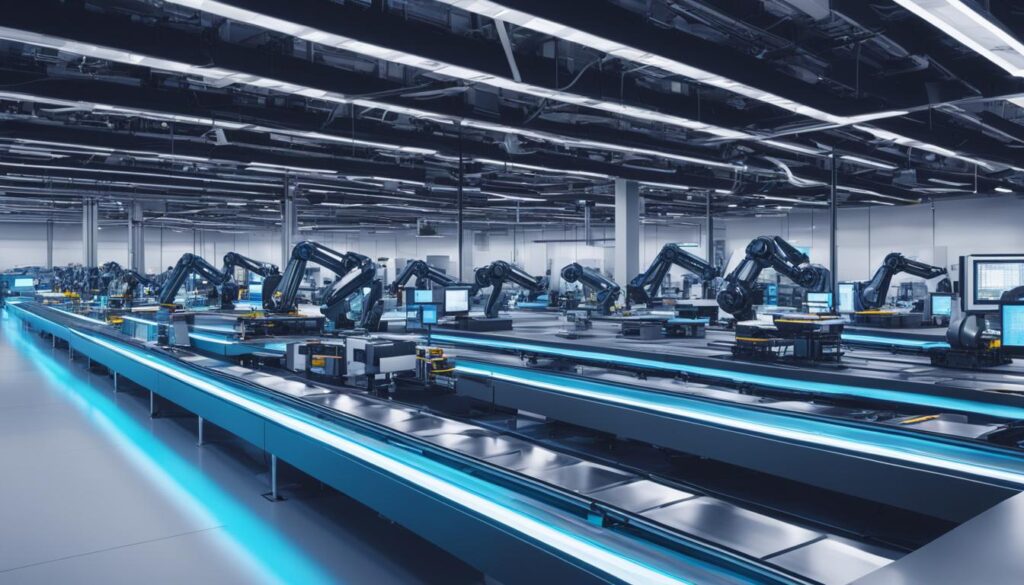
Manufacturing hyper automation has revolutionized the way companies operate in the manufacturing sector. By harnessing the power of AI, robotics, and IoT, manufacturers can achieve higher efficiency, reduce costs, and unlock new levels of innovation.
AI Compliance and Ethics
AI compliance and ethics are crucial considerations when utilizing AI technology in business environments. In 2023, there was a heightened focus on adhering to legal regulations, industry standards, and ethical principles throughout the development and deployment of AI solutions. Data privacy in AI became a top priority, necessitating compliance with regulations like the General Data Protection Regulation (GDPR) and the California Consumer Privacy Act (CCPA). Additionally, ensuring consumer protection against misleading or harmful AI-driven products and services gained significant attention.
Businesses must incorporate AI compliance and ethics into their strategies to establish trust and maintain ethical practices. By prioritizing data privacy, companies can protect both their customers and themselves from potential data breaches or misuse. Implementing transparency and clear guidelines regarding the use and limitations of AI technologies is essential to foster trust among consumers and stakeholders.
AI compliance and ethics are not only about abiding by legal regulations but also about ensuring fair and responsible AI practices. It’s crucial for businesses to understand the potential social impact of their AI systems and take steps to mitigate any biases or unethical consequences. By encouraging diversity in AI development teams and implementing robust testing and validation processes, organizations can actively address issues of bias and discrimination in their AI systems.
The Role of AI in Data Privacy
AI technologies that process massive amounts of data raise concerns about data privacy and the protection of personally identifiable information (PII). Companies must implement strict safeguards to ensure the responsible handling of sensitive data and comply with relevant privacy regulations.
- Encryption and Anonymization: Utilizing encryption techniques and anonymization methods for data storage and processing can help protect the privacy of individuals and prevent unauthorized access.
- Data Access Controls: Implementing access controls ensures that only authorized individuals have access to sensitive data. Role-based access control (RBAC) systems and data classification frameworks are commonly used for this purpose.
- Consent Management: Obtaining informed consent from individuals before collecting and processing their data is essential. Companies must provide clear information about how the data will be used, as well as the individuals’ rights regarding their data.
Consumer Protection in AI
Protecting consumers from potential harm caused by AI-driven products and services is paramount. Companies must ensure that their AI systems do not compromise safety, deceive consumers, or discriminate against certain groups.
- Algorithmic Transparency: Transparency regarding AI algorithms is crucial for consumers to understand how decisions are made. Providing explanations and easily accessible information about the functioning and limitations of AI systems fosters trust and empowers consumers.
- Fairness and Non-Discrimination: Businesses must strive for fairness and non-discrimination in their AI systems, avoiding biases based on race, gender, age, or any other protected characteristics. Regular audits and monitoring can help identify and correct biases in AI models and algorithms.
- Accountability: Establishing clear lines of accountability for AI systems is essential. Companies should be held responsible for any harm caused by their AI technologies and provide avenues for recourse or complaint resolution.
Key Considerations for AI Compliance and Ethics
| Considerations | Actions |
|---|---|
| Data Privacy | Implement encryption and anonymization techniques, enforce access controls, and obtain explicit consent for data collection and processing. |
| Algorithmic Transparency | Provide explanations and accessible information about AI algorithms and their decision-making processes. |
| Fairness and Non-Discrimination | Audit and monitor AI systems for biases, ensuring fairness and non-discrimination across protected characteristics. |
| Accountability | Establish clear lines of accountability for AI systems and take responsibility for any harm caused. |
Businesses that prioritize AI compliance and ethics not only mitigate legal and reputational risks but also build trust with their customers and stakeholders. By embracing responsible AI practices, companies can pave the way for a future where AI technologies benefit society while protecting individual rights and promoting fairness.
Emerging AI Technologies
Alongside the major trends, several emerging AI technologies showed immense potential in 2023. These include AI simulation, causal AI, federated machine learning, graph data science, neuro-symbolic AI, and reinforcement learning. These technologies offer new possibilities for enhancing digital customer experiences, making better business decisions, and building sustainable competitive differentiation.
AI simulation allows the creation of simulated environments to train AI models and test their performance in various scenarios, minimizing the need for costly real-world testing.
Causal AI focuses on understanding cause-and-effect relationships in data, enabling businesses to gain deeper insights into their operations and make more informed decisions.
Federated machine learning allows multiple organizations to collaborate and train AI models on their respective datasets without compromising data privacy, resulting in more accurate and robust models.
Graph data science utilizes graph theory to analyze complex relationships and patterns in data, enabling businesses to uncover hidden insights and optimize processes.
Neuro-symbolic AI combines the power of neural networks and symbolic reasoning, bridging the gap between complex pattern recognition and human-like reasoning, opening new possibilities in natural language processing, robotics, and more.
Reinforcement learning is a machine learning paradigm where AI agents learn through trial and error, receiving rewards for desirable actions, allowing them to improve their performance over time.
These emerging AI technologies have the potential to revolutionize industries and drive innovation. From creating realistic AI simulations to unlocking causal insights and leveraging the power of graph data science, these technologies pave the way for smarter, more efficient, and more intelligent systems.
Gartner’s Hype Cycle for Emerging Technologies
Gartner’s Hype Cycle for Emerging Technologies provides valuable insights into the latest technological advancements and their potential impact. In the 2023 report, generative AI took center stage, establishing itself as a transformative force in the AI landscape. Topping the hype cycle, generative AI, including technologies like ChatGPT, showcased groundbreaking advancements that captured the attention of experts and industry leaders.
Generative AI’s ability to create human-like content and its widespread applications across various sectors earned it a prominent position in the Hype Cycle for Emerging Technologies. The breakthroughs in generative AI have opened up new possibilities in content generation, product design, data augmentation, and more.
Generative AI has the potential to revolutionize industries, offering innovative solutions and unlocking unprecedented opportunities for businesses. Its ability to create compelling content, assist in product design, and generate synthetic data has garnered significant acclaim.
Gartner also highlighted other emergent AI technologies in the report. AI simulation, causal AI, and graph data science were deemed worthy of attention due to their potential to reshape industries and drive innovation. These technologies possess unique capabilities and offer exciting possibilities for businesses venturing into the realm of AI.
As Gartner continues to track the progress of emerging technologies, it provides valuable guidance to businesses and decision-makers, enabling them to stay informed about the latest trends and make informed strategic choices. The Hype Cycle for Emerging Technologies serves as a compass, navigating the complex landscape of AI and helping businesses embrace transformative advancements that can drive their success.
Conclusion
The year 2023 has been a transformative one for the field of AI, with significant trends impacting various industries and reshaping the way businesses operate. Generative AI, UX-driven AI, AI assistants, AI healthcare, computer vision, AI-powered cybersecurity, manufacturing hyper automation, AI compliance and ethics, and emerging AI technologies have all made substantial impacts.
These trends have not only enhanced customer experiences but also helped businesses tackle complex challenges more effectively. As we look to the future, it is essential to prioritize responsible and ethical AI practices. This includes complying with data privacy regulations, ensuring consumer protection, and addressing ethical concerns related to AI-generated content.
The impact of these trends is far-reaching and offers endless possibilities for shaping the future of technology. AI has the potential to revolutionize industries, improve decision-making, enhance productivity, and drive innovation. By embracing these AI trends, businesses can stay ahead of the curve and leverage the power of AI to drive success in the years to come.
FAQ
What is generative AI?
Generative AI refers to AI systems that can create content, such as text, images, and audio, in a human-like manner.
How has generative AI impacted businesses?
Generative AI has enabled businesses to generate large volumes of content for marketing and social media, assist in product design and prototyping, and generate synthetic data for machine learning and data analysis.
What is UX-driven AI?
UX-driven AI uses AI technologies and algorithms to enhance the user experience in digital products and services.
What are the benefits of UX-driven AI?
UX-driven AI can deliver personalized content and recommendations, predict user behaviors, and improve search engine results.
What are AI assistants?
AI assistants are software programs powered by AI that can perform tasks and provide information through natural language conversations.
How are AI assistants used in businesses?
AI assistants have been widely used in customer support, translation services, and virtual meeting support to enhance customer service, improve efficiency, and enhance user experiences.
How has AI impacted the healthcare industry?
AI has made significant advancements in the healthcare industry, improving patient care, streamlining processes, and enhancing medical research.
What are some applications of AI in healthcare?
AI can assist in disease detection through medical imaging, customize treatment plans based on genetics and patient data, and expedite the drug discovery process.
What is computer vision?
Computer vision is a subfield of AI that focuses on enabling computers to interpret and understand the visual world.
How is computer vision used in various industries?
Computer vision is utilized in agriculture for crop monitoring and disease detection, in autonomous vehicles for navigation and obstacle detection, and in environmental monitoring for wildlife tracking and weather monitoring.
What is AI-powered cybersecurity?
AI-powered cybersecurity refers to the use of AI and machine learning to protect digital assets, data, and networks from cyber threats.
What are the benefits of AI-powered cybersecurity?
AI-powered cybersecurity solutions enable real-time threat detection and prevention, provide scalability in analyzing and protecting against threats, and enable real-time response to security incidents.
What is manufacturing hyper automation?
Manufacturing hyper automation refers to the extensive use of advanced technologies such as AI, robotics, and the Internet of Things to create highly efficient and largely autonomous manufacturing systems.
How does manufacturing hyper automation benefit businesses?
Manufacturing hyper automation enhances agility and responsiveness in manufacturing processes, allows for predictive maintenance for machinery and equipment, and provides data-driven insights for process optimization and product innovation.
Why is AI compliance and ethics important?
AI compliance and ethics ensure that businesses adhere to legal regulations, industry standards, and ethical principles when developing and deploying AI technologies.
What are some considerations for AI compliance and ethics?
Businesses need to comply with data privacy regulations, protect consumers from misleading or harmful AI-driven products and services, and ensure responsible and ethical AI practices.
What are some emerging AI technologies?
Some emerging AI technologies include AI simulation, causal AI, federated machine learning, graph data science, neuro-symbolic AI, and reinforcement learning.
What is Gartner’s Hype Cycle for Emerging Technologies?
Gartner’s Hype Cycle for Emerging Technologies is an annual report that identifies key insights about emerging technologies.
Which AI technology topped Gartner’s Hype Cycle in 2023?
Generative AI, including technologies like ChatGPT, topped Gartner’s Hype Cycle for Emerging Technologies in 2023.