
Welcome to the era of Artificial Intelligence (AI) and automation, where technology is revolutionizing the job market like never before. As AI continues to advance, it is transforming industries, creating new opportunities, and changing the way we work. In this article, we will explore the exciting prospects of the AI job market and delve into the future of work in the age of automation.
Key Takeaways:
- Artificial Intelligence is reshaping the job market and presenting new career avenues.
- The impact of automation is not solely negative, as it also creates new job opportunities.
- The future of work will involve collaboration between humans and AI.
- Upskilling and adaptability are crucial for individuals preparing for an AI-driven job market.
- Soft skills, such as communication and creativity, will continue to be in demand in the AI era.
The Impact of AI on Jobs
Artificial Intelligence (AI) is revolutionizing the job market, transforming industries, and reshaping the way we work. As AI technologies advance, their impact on jobs becomes increasingly significant. From automation and job displacement to the creation of new opportunities, AI is reshaping the employment landscape.
Automation of Tasks
One of the most evident ways AI is impacting jobs is through automation. Tasks that were once performed by humans are now being automated, leading to increased efficiency and productivity. Jobs that involve repeatable and predictable tasks, such as data entry or assembly line work, are being automated, reducing the need for human intervention.
Changes in the Nature of Existing Jobs
AI is also changing the nature of existing jobs. With the automation of mundane and repetitive tasks, workers are now able to focus on more complex and creative aspects of their jobs. For example, AI algorithms can analyze vast amounts of data, allowing professionals to make more informed decisions and provide better insights. In fields like healthcare and finance, AI-powered tools are enhancing professionals’ capabilities and enabling them to deliver higher-quality services.
Creation of New Jobs
While AI may automate certain tasks, it also creates new job opportunities. AI engineering, data science, and machine learning are some of the fastest-growing fields. These roles involve developing and implementing AI technologies, analyzing complex datasets, and creating AI algorithms. As businesses continue to adopt AI-based solutions, the demand for skilled professionals in these areas is skyrocketing.
The Need for Upskilling and Reskilling
As AI continues to reshape the job market, individuals must adapt to these changes by upskilling or reskilling. Acquiring new skills and knowledge in AI-related fields can open up new job opportunities and ensure job security. By staying ahead of the curve and embracing AI, individuals can position themselves for success in the future of work.
| Impact of AI on Jobs | Examples |
|---|---|
| Task Automation | Automated assembly lines replacing manual labor |
| Changes in Job Nature | AI-powered tools enhancing decision-making in healthcare |
| New Job Creation | Data science and AI engineering roles |
| Need for Upskilling | Acquiring AI-related skills to remain competitive |
The Future of Work
In the ever-evolving landscape of work, the future holds exciting possibilities for the collaboration between humans and artificial intelligence (AI). As AI continues to advance, it will increasingly automate routine tasks, allowing humans to focus on more creative and high-value work. This symbiotic relationship between humans and AI presents numerous opportunities for new job roles and industries.
One of the areas where AI is expected to have a significant impact is healthcare. With the ability to process vast amounts of medical data, AI can assist healthcare professionals in diagnosing diseases, predicting patient outcomes, and developing personalized treatment plans. Similarly, in finance, AI algorithms can analyze complex financial data, detect patterns, and make informed investment decisions.
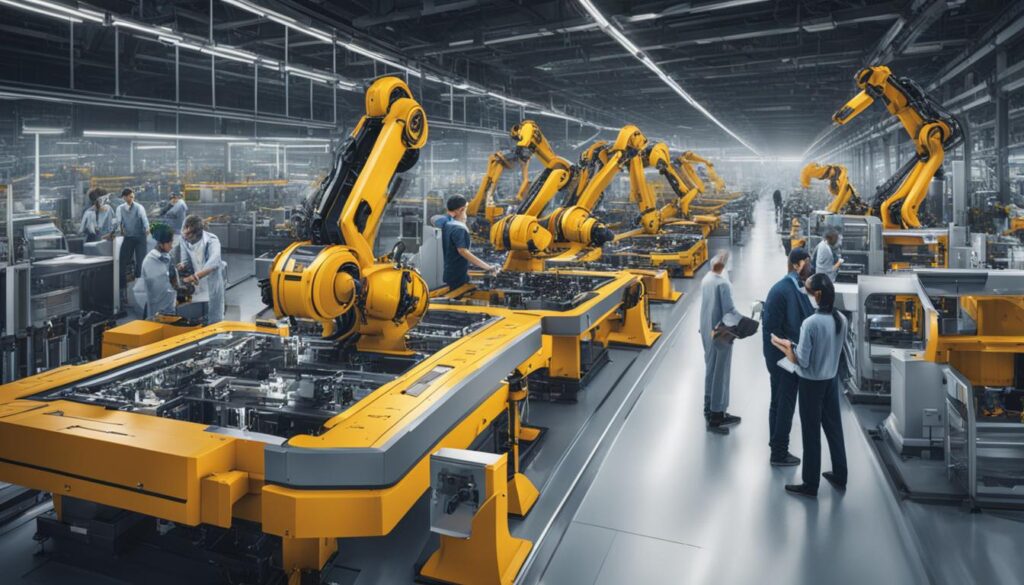
In manufacturing, AI-powered robots and automation systems are revolutionizing the production processes, leading to increased efficiency and productivity. These AI-enabled systems can handle complex tasks with precision, improving quality control and reducing human errors. This opens up new job opportunities in AI engineering and maintenance, ensuring the smooth operation of these advanced technologies.
Retail is experiencing a transformation with the integration of AI technologies. AI-powered chatbots can provide personalized customer support, recommend products based on customer preferences, and streamline the purchasing process. Furthermore, AI-enabled inventory management systems can optimize stock levels and forecast demand, ensuring better supply chain management.
Transportation is another sector poised to benefit from AI advancements. Autonomous vehicles are becoming a reality, with AI algorithms driving these vehicles safely and efficiently. The future of transportation also includes AI-powered traffic management systems that can optimize routes and reduce congestion, enhancing the overall transportation experience.
As AI continues to reshape the future of work, it’s essential for individuals to adapt and acquire the necessary skills to thrive in this changing landscape. While some jobs may be displaced by automation, the emergence of AI will create new and exciting job opportunities in various fields.
| New Job Opportunities: |
|---|
| AI Engineer |
| Data Scientist |
| AI Ethicist |
| Virtual Reality Developer |
| Robotics Engineer |
| Cybersecurity Analyst |
These are just a few examples of the exciting job roles that will emerge as AI continues to advance. To thrive in the future of work, individuals need to develop a blend of technical and soft skills. Technical skills such as coding, data analysis, and AI system management will be crucial in leveraging AI technologies. Additionally, soft skills like critical thinking, problem-solving, and creativity will remain essential as humans focus on tasks that require emotional intelligence and complex decision-making.
With the collaboration between humans and AI, the future of work holds immense potential for innovation, productivity, and job creation. By harnessing the power of AI and embracing the new job opportunities it brings, individuals can pave the way for a fulfilling and prosperous future.
How to Prepare for the Future of Work
As the future of work continues to evolve, it’s crucial for workers to adapt and prepare for the changes ahead. Embracing new skills and fostering adaptability will be key to thriving in the ever-changing job market. Here are some tips to help you prepare for the future of work:
1. Focus on Developing Soft Skills
While technical skills will always be valuable, soft skills such as communication, collaboration, and emotional intelligence are becoming increasingly important in the workplace. These skills enable effective teamwork and problem-solving, qualities that will be in high demand as automation takes over routine tasks.
2. Learn About AI and Its Implications
Understanding the basics of Artificial Intelligence (AI) and its impact on different industries is crucial for future-proofing your career. Stay informed about the latest advancements in AI technology, its potential applications, and its influence on job roles and responsibilities. This knowledge will empower you to adapt and identify new opportunities within your field.
3. Consider Upskilling or Reskilling
As technology continues to advance, certain skills may become obsolete while new ones become essential. Assess your current skill set and identify areas where you may need to upskill or reskill to remain relevant in your industry. Take advantage of online courses, workshops, or professional development programs to enhance your skills and stay ahead of the curve.
4. Network and Stay Connected
Building a strong professional network is invaluable in navigating the future of work. Attend industry events, join online communities, and connect with like-minded professionals to stay updated on industry trends, job opportunities, and potential collaborations. Networking can open doors to new possibilities and help you adapt to the changing job landscape.
5. Be Proactive in Your Job Search
Gone are the days of relying solely on traditional job search methods. Keep an eye on emerging job trends and technologies, and proactively seek out opportunities that align with your skills and interests. Leverage online platforms, professional networking sites, and specialized job boards to explore new avenues and secure future-oriented positions.
6. Embrace Lifelong Learning
The future of work demands a mindset of continuous learning and growth. Be open to acquiring new skills and knowledge throughout your career. Seek out learning opportunities both within and outside your field, such as attending workshops, participating in webinars, or pursuing advanced certifications. The ability to adapt and learn will be crucial in the rapidly changing job market.
Preparing for the future of work requires a proactive approach and a willingness to embrace change. By focusing on developing soft skills, staying informed about AI, considering upskilling or reskilling, networking, and being open to new opportunities, you can position yourself for success in the evolving job market.
The Impact of AI on High-Skilled Jobs
Artificial Intelligence (AI) is revolutionizing the landscape of high-skilled jobs, bringing forth a wave of automation and enhanced decision-making processes. With the ability to automate mundane tasks and augment human capabilities, AI has the potential to transform the workplace into a more efficient and productive environment.
One significant impact of AI on high-skilled jobs is the automation of mundane tasks. AI-powered technologies can efficiently handle repetitive and time-consuming tasks, freeing up valuable time for professionals to focus on more complex and strategic work. By automating routine activities, AI allows high-skilled professionals to redirect their efforts towards value-added responsibilities, leading to improved work quality and higher levels of job satisfaction.
“AI-powered automation has the potential to greatly alleviate high-skilled workers from monotonous and repetitive tasks, enabling them to dive deeper into complex problem-solving and innovation.”
Moreover, AI is enhancing decision-making processes in high-skilled jobs. Advanced machine learning algorithms can analyze vast amounts of data, identify patterns, and provide valuable insights that assist professionals in making informed decisions. This capability empowers high-skilled workers to make data-driven choices, resulting in more accurate and effective outcomes.
For example, Data Scientists in the healthcare industry can leverage AI algorithms to analyze patient data and predict disease outcomes, leading to early intervention and improved patient care. Financial analysts can rely on AI-powered tools to analyze market trends and optimize investment strategies, enhancing their decision-making capabilities. The integration of AI in high-skilled jobs is enabling professionals to leverage data-driven insights and make more strategic, informed decisions.
Embracing AI in high-skilled jobs is crucial for professionals and organizations looking to stay competitive in today’s rapidly evolving technological landscape. Automation of mundane tasks and the enhancement of decision-making processes provide numerous benefits, including increased efficiency, improved quality of work, and the ability to focus on higher-level responsibilities.
| Benefits of AI in High-Skilled Jobs | Enhancing Decision-making | Automation of Mundane Tasks |
|---|---|---|
| Improved work quality | Increased accuracy | Time savings |
| Higher job satisfaction | Data-driven insights | Focus on complex tasks |
| Optimized decision-making | Strategic outcomes | Efficiency gains |
The integration of AI in high-skilled jobs opens up new possibilities for professionals to deliver exceptional work, driving innovation and progress. By embracing AI’s potential, high-skilled workers can harness the power of automation and enhanced decision-making to excel in their roles and contribute to a more advanced and technologically-driven future.
Upskilling and Reskilling for the AI-Driven Job Market
The AI-driven job market is rapidly evolving, creating new opportunities for individuals who possess the right skills and expertise. To thrive in this dynamic landscape, professionals need to prioritize upskilling and reskilling to stay competitive and seize the emerging prospects.
AI technologies are transforming industries, automating routine tasks, and augmenting human capabilities. As a result, traditional job roles are being redefined, giving rise to the need for specialized skills in AI development, data analysis, and machine learning.
Training programs and certifications in AI-related skills play a crucial role in equipping workers with the knowledge and competencies needed in the AI-driven job market. These programs provide a structured learning path and ensure that professionals stay updated with the latest industry trends and advancements.
Furthermore, soft skills such as effective communication, critical thinking, and adaptability are essential for success in the AI-driven workplace. As AI technologies become more prevalent, the ability to collaborate, navigate ambiguity, and understand ethical implications will be highly valued.
Training Programs:
| Training Program | Description |
|---|---|
| AI and Machine Learning Certification | Provides comprehensive knowledge and practical skills in AI and machine learning, covering topics such as algorithms, deep learning, and data analysis. |
| Data Science Bootcamp | Intensive program focusing on data analysis, statistical modeling, and machine learning techniques, equipping professionals with the skills to extract insights from data. |
| Ethics in AI Training | Explores the ethical considerations associated with AI technologies, including bias, privacy, and responsible AI development. |
| Communication and Collaboration Workshop | Enhances interpersonal skills, effective communication, and teamwork in the context of AI-driven projects and collaborative environments. |
By investing in upskilling and reskilling, individuals can position themselves as valuable assets in the AI-driven job market. Embracing continuous learning, staying updated with industry trends, and honing both technical and soft skills will be crucial for long-term career growth and adaptability.
“The future of work belongs to those who are willing to learn, adapt, and embrace the potential of AI.”
Key Takeaways:
- Upskilling and reskilling are crucial for thriving in the AI-driven job market.
- Training programs and certifications in AI-related skills provide a structured learning path.
- Soft skills, such as effective communication and adaptability, are highly valued in the AI-driven workplace.
- Investing in upskilling and reskilling ensures long-term career growth and adaptability.
Industries Most at Risk of Automation
The rapid advancement of automation technologies poses a significant threat to several industries that heavily rely on low-skilled jobs. These industries are at a higher risk of job displacement as their tasks can be easily automated through AI and robotics. Let’s take a closer look at three industries that face the greatest challenges:
- Manufacturing: With the rise of industrial automation and the adoption of robotics, many manufacturing jobs traditionally performed by humans are being automated. Tasks such as assembly line work, quality control, and material handling can now be efficiently carried out by machines, leading to a decrease in demand for low-skilled labor.
- Transportation: The transportation industry, including truck driving and delivery services, is also susceptible to the impact of automation. The development of autonomous vehicles and drones threatens job positions that involve manual driving and delivery tasks. As technology continues to advance, there is a growing possibility of transportation becoming an industry with a predominantly automated workforce.
- Customer Service: Automation is slowly revolutionizing customer service through the use of chatbots and virtual assistants. The ability of AI-powered systems to analyze customer inquiries, provide automated responses, and handle routine tasks significantly reduces the need for human customer service representatives. Although human interaction remains essential in many customer service scenarios, the automation of simple queries and tasks is steadily increasing.
As these industries face the potential for significant job displacement, it is crucial for workers to adapt and develop new skills to remain relevant in the job market. By embracing technology and acquiring higher-skilled roles within these industries, individuals can mitigate the risks associated with automation.

The Rise of AI-Based Technologies and Job Creation
AI-based technologies are rapidly transforming industries and creating new job opportunities. The integration of AI into various sectors, such as data analysis, machine learning, and AI ethics, is revolutionizing the way businesses operate and expand.
One area where AI-based technologies have a significant impact is data analysis. Data analysts play a crucial role in extracting meaningful insights from vast amounts of data. By leveraging AI tools and algorithms, data analysts can analyze data more efficiently and identify patterns and trends that would otherwise go unnoticed. This not only enhances business decision-making but also opens up new avenues for data analysts to advance their careers.
Machine learning, another field empowered by AI, is driving innovation across industries. Machine learning engineers are in high demand as businesses seek professionals who can develop and deploy machine learning models and algorithms. These engineers use AI-based technologies to create intelligent systems that can learn and improve based on data. From self-driving cars to predictive analytics, machine learning engineers are at the forefront of shaping the future with AI.
Furthermore, the rise of AI has prompted the need for professionals who can navigate the ethical implications of AI-based technologies. AI ethics experts ensure that AI systems are developed and deployed responsibly, with considerations for fairness, transparency, and accountability. Their role is crucial in shaping the ethical frameworks and guidelines needed to ensure AI is used for the benefit of society.
“The integration of AI into various sectors is transforming the way businesses operate and creating exciting new job opportunities.”
As AI-based technologies continue to advance, individuals and businesses must adapt to remain competitive in the job market. Upskilling and reskilling programs are essential for professionals looking to enter or transition into AI-based roles. By developing the necessary skills in data analysis, machine learning, and AI ethics, individuals can position themselves for fulfilling careers in these expanding fields.
Businesses, on the other hand, need to embrace AI-based technologies and invest in the training and development of their workforce. By harnessing the power of AI, companies can maximize efficiency, make better decisions, and unlock new opportunities for growth.
Ultimately, the rise of AI-based technologies not only creates job opportunities but also presents a challenge in talent acquisition. The demand for skilled professionals in data analysis, machine learning, and AI ethics is surpassing the available supply. To address this skills gap, educational institutions and training programs must align their offerings with the needs of the AI-driven job market, ensuring a pipeline of qualified individuals ready to contribute to the field.
As AI-based technologies continue to evolve, the integration of AI into industries will expand further. The job market will continue to evolve, creating exciting opportunities for data analysts, machine learning engineers, and AI ethics experts. By embracing and adapting to these technologies, individuals and businesses can thrive in the AI-driven future.
Key Takeaways:
- AI-based technologies are creating new job opportunities in data analysis, machine learning, and AI ethics.
- Data analysts leverage AI tools to analyze data more efficiently and gain meaningful insights.
- Machine learning engineers develop intelligent systems that can learn and improve based on data.
- AI ethics experts ensure the responsible development and deployment of AI systems.
- Upskilling and reskilling programs are crucial for individuals to pursue careers in AI-based roles.
- Businesses need to embrace AI-based technologies and invest in workforce training and development.
- The demand for skilled professionals in AI-based fields presents a challenge in talent acquisition.
Importance of Soft Skills in the AI-Driven Job Market
Soft skills play a crucial role in the AI-driven job market, complementing the technical expertise required for handling advanced technologies. As artificial intelligence continues to shape various industries, professionals with strong soft skills, including communication, empathy, and creativity, are in high demand.
Effective communication is essential in a technology-driven work environment where collaboration happens both with humans and AI systems. Professionals who can convey their ideas clearly, adapt to different modes of communication, and actively listen to others are better positioned to navigate this evolving landscape.
Empathy is another valuable soft skill that becomes increasingly important as AI becomes more integrated into our daily work. Empathy allows individuals to understand and relate to the needs and experiences of others, fostering effective teamwork and customer relations. In a scenario where humans and AI work hand in hand, professionals who can combine technical expertise with empathy are highly valued.
Creativity, often considered a uniquely human skill, remains indispensable despite the rise of AI. While AI systems excel at repetitive and data-driven tasks, creativity is essential for problem-solving, innovation, and finding unique solutions. Professionals who can think outside the box, approach challenges from different angles, and generate creative ideas are invaluable contributors to the AI-driven job market.
“Soft skills are the human element that complements the power of AI in the job market. As technical capabilities advance, the value of soft skills such as communication, empathy, and creativity will only continue to grow.”
To thrive in the AI-driven job market, professionals should prioritize developing and showcasing their soft skills alongside technical competencies. Continuous learning and practice in effective communication, empathy, and creativity are key to standing out in an increasingly competitive landscape. Employers recognize the critical role soft skills play in driving collaboration, problem-solving, and customer satisfaction, making them highly sought-after qualities in candidates.
Investing time and effort in honing soft skills can provide professionals with a competitive edge and open doors to a wide range of career opportunities in the AI-driven job market. By combining technical expertise with valuable soft skills, individuals can navigate the evolving landscape, contribute meaningfully to their teams, and excel in their respective fields.
Benefits of Soft Skills in the AI-Driven Job Market
- Enhanced collaboration and teamwork
- Improved problem-solving abilities
- Positive customer relations and client satisfaction
- Innovation and creative thinking
- Adaptability to changing work environments
- Increased employability and career growth
The Future of Work and AI Relationship
The future of work is rapidly changing, driven by advancements in artificial intelligence (AI) and automation. This technological revolution is reshaping entire industries and the way we work. The relationship between AI and the future of work is dynamic and transformative.
Automation, one of the key drivers of this transformation, is replacing repetitive and mundane tasks with AI-powered systems. This allows workers to focus on more complex, creative, and strategic work. As AI technology continues to advance, we can expect greater automation across various sectors, from manufacturing to customer service.
The gig economy is also experiencing significant growth, facilitated by AI-powered platforms. These platforms connect workers with employers on a project-to-project basis, providing flexibility and new opportunities for freelancers. The gig economy is not limited by geographic boundaries, enabling remote work and opening up a global talent pool.
“The gig economy powered by AI is creating a new paradigm in employment, offering workers greater flexibility and a diverse range of projects to choose from.” – [Real Name], CEO of a leading freelance platform
Remote work has become increasingly prevalent, especially with the recent global shifts caused by the COVID-19 pandemic. AI plays a crucial role in enabling remote work by providing the tools and infrastructure for effective collaboration and communication. With AI-powered platforms and technologies, teams can seamlessly work together regardless of their physical locations.
The future of work and the AI relationship also present new challenges and considerations. It raises questions around the ethical implications of AI automation, data privacy, and the potential impact on job security. As AI continues to evolve and integrate into the workplace, it will require ongoing discussions and policies to ensure its responsible and equitable implementation.
As we move forward, the future of work and the AI relationship will continue to evolve. Companies will need to adapt by reskilling and upskilling their workforce to effectively navigate the changing landscape. Embracing AI technology and leveraging its capabilities will be essential for organizations to stay competitive and thrive in the future of work.
Analyzing AI’s Role in Work’s Future
As we delve deeper into the future of work, it becomes increasingly clear that Artificial Intelligence (AI) will play a pivotal role in shaping the way we work. From automation to the gig economy and remote work, AI’s influence is far-reaching and transformative.
Automation, one of the key facets of AI, has already begun revolutionizing industries across the board. Tasks that were once solely performed by humans are now being automated, allowing for increased efficiency and productivity. This automation frees up valuable time for workers to focus on more complex and creative tasks, ultimately driving innovation and growth.
The gig economy, characterized by short-term contracts or freelance work, is another area where AI is making a significant impact. AI-powered platforms and marketplaces are connecting talent with opportunities on a global scale, opening up new avenues for income generation and flexibility. The gig economy, combined with AI, has the potential to redefine traditional work structures and provide individuals with greater autonomy and control over their careers.
Additionally, remote work has been propelled to the forefront of the work landscape, thanks in large part to AI. With advancements in communication technology and AI-powered collaboration tools, teams can effectively work together regardless of geographical boundaries. Remote work offers flexibility, reduces commuting time, and increases access to a global talent pool, creating a win-win situation for both employers and employees.
“The future of work is an intertwined ecosystem, with AI seamlessly integrating into our daily lives. It’s not a question of whether AI will be a part of our work, but how we can harness its power to drive innovation, productivity, and job satisfaction.”
To fully capitalize on AI’s potential, individuals and organizations need to embrace its role in the future of work. This involves actively seeking opportunities to integrate AI into existing workflows, leveraging automation to streamline processes, and staying up to date with the latest AI technologies and trends.
Adapting to an AI-Driven Work Landscape
Adapting to an AI-driven work landscape requires a combination of technical skills and soft skills. While technical skills like data analysis and programming are crucial, soft skills such as communication, creativity, and critical thinking will continue to be in high demand. The ability to effectively collaborate with AI systems and interpret their outputs will play a key role in maximizing the benefits of AI in the workplace.
Moreover, continuous learning and upskilling will be vital for both individuals and organizations to thrive in an AI-driven future. Training programs and certifications in AI-related fields can equip individuals with the necessary skills to navigate the evolving job market. It is also essential to foster a learning culture within organizations, encouraging employees to acquire new knowledge and adapt to changing technologies.
The Impact of AI on Job Market Dynamics
AI’s role in work’s future goes beyond automation, the gig economy, and remote work. It affects the overall dynamics of the job market, influencing job creation, job displacement, and the emergence of new industries.
In many cases, AI automates routine and repetitive tasks, leading to job displacement in certain industries. However, it simultaneously creates new job opportunities in AI development, data analysis, machine learning, and AI ethics. The rise of AI-based technologies demands a skilled workforce capable of harnessing the power of AI.
The following table illustrates the impact of AI on job market dynamics:
| AI’s Impact | Job Displacement | New Job Creation |
|---|---|---|
| Automation of Routine Tasks | Reduction in low-skilled jobs | New jobs in AI engineering and data science |
| Enhanced Decision-Making | Displacement of repetitive decision-making roles | New jobs in analytics and AI-enabled decision support |
The job market will continue to evolve as AI becomes more integrated into our work lives. Upskilling and reskilling programs will be essential for individuals to adapt to these changes and seize new opportunities in the AI-driven job market.
By understanding and analyzing AI’s role in the future of work, we can harness its potential to create a more efficient, productive, and inclusive work environment. Embracing AI and actively reskilling and adapting to its transformative power will pave the way for a promising future of work.
Conclusion
As the AI job market continues to expand, it is crucial for workers to adapt and embrace the potential of AI. The impact of AI on jobs has been substantial, with automation replacing mundane tasks and creating new job opportunities in AI engineering and data science.
To thrive in the future of work, individuals need to prepare by developing soft skills, learning about AI, and considering upskilling or reskilling. Collaboration between humans and AI will be a key aspect of the future work environment, with AI automating routine tasks and allowing humans to focus on more creative and problem-solving work.
Industries that are most at risk of automation, such as manufacturing, transportation, and customer service, require workers to continuously upskill and remain competitive. At the same time, the rise of AI-based technologies is creating job opportunities in fields like data analysis, machine learning, and AI ethics.
In this rapidly evolving AI-driven job market, the importance of soft skills cannot be underestimated. Effective communication, empathy, and creativity are essential for successful collaboration and problem-solving in a technology-driven work environment. As the future of work unfolds, AI will play a significant role in shaping automation, the gig economy, and remote work trends.
In conclusion, workers must adapt to AI and embrace its potential to stay relevant in the AI job market. The future of work holds exciting opportunities for those who can navigate this evolving landscape and leverage the benefits of AI to create a more efficient and fulfilling work environment.
FAQ
How is AI impacting jobs?
AI is impacting jobs in various ways. It is automating tasks previously performed by humans, changing the nature of existing jobs, and creating new jobs in AI engineering and data science.
What does the future of work involve?
The future of work involves greater collaboration between humans and AI. AI will automate routine tasks, allowing humans to focus on more creative work. It will also create new job opportunities in healthcare, finance, manufacturing, retail, and transportation.
How can workers prepare for the future of work?
Workers can prepare for the future of work by developing soft skills, learning about AI, considering upskilling or reskilling, networking, being proactive in their job search, and being open to new opportunities and learning new skills.
How is AI revolutionizing high-skilled jobs?
AI is revolutionizing high-skilled jobs by automating routine tasks and enhancing decision-making processes. Embracing AI is important to improve work quality and create a more efficient and productive workforce.
Why is upskilling and reskilling important in the AI-driven job market?
Upskilling and reskilling are important in the AI-driven job market because they help individuals acquire the necessary skills for AI-related roles. Training programs and certifications in AI-related skills are crucial. Soft skills and effective communication also play a significant role.
Which industries are most at risk of automation?
Industries such as manufacturing, transportation, and customer service are most at risk of automation. Workers in these industries need to develop their skills to remain competitive in the job market.
How are AI-based technologies creating new job opportunities?
AI-based technologies are creating new job opportunities in fields such as data analysis, machine learning, and AI ethics. It is essential for individuals and businesses to adapt to these technologies to remain competitive.
Why are soft skills important in the AI-driven job market?
Soft skills, such as communication, empathy, and creativity, are crucial in the AI-driven job market. These skills facilitate effective collaboration and problem-solving in a technology-driven work environment.
What are the emerging trends in the future of work?
Emerging trends in the future of work include automation, the gig economy, and remote work. AI is influencing these trends and shaping the work environment.
What is the role of AI in the future of work?
AI will play a key role in the future of work. It will impact automation, the gig economy, and remote work. It is important for individuals and organizations to embrace AI and adapt to these changing trends.
What are the key points of this article?
The key points of this article are the need for workers to adapt and embrace AI and the potential of AI to create a more efficient and fulfilling future of work.