Artificial intelligence (AI) is revolutionizing our everyday lives in ways we may not even realize. From the moment we wake up and unlock our smartphones to the personalized recommendations we receive while shopping online, AI has become deeply integrated into our daily routine.
In this article, we will explore 10 surprising ways AI impacts our lives. Based on factual data from multiple sources, we will delve into how AI enhances our security, personalizes our social media feeds, and even improves our commuting experiences. Get ready to be amazed by the powerful influence of AI in our everyday lives!
Key Takeaways
- AI is present in various aspects of our daily lives, from unlocking our smartphones with face ID to receiving personalized social media feeds.
- AI-powered tools like Grammarly help us draft error-free emails, while AI filters block spam and enhance email security.
- Google search relies on AI algorithms to deliver personalized results and ads based on our preferences.
- Digital voice assistants like Siri and Alexa utilize AI to respond to voice commands and provide assistance in various tasks.
- Smart home devices with AI capabilities learn our preferences and adapt to our needs to make our lives more comfortable and efficient.
Unlocking Your Phone with Face ID
One of the first AI applications people encounter each day is unlocking their smartphones using face ID. Apple’s FaceID, for example, uses AI algorithms to light up the face, capture an image, and compare it with stored data to determine if the person trying to unlock the phone is the authorized user or not. This technology enhances security and makes unlocking smartphones more convenient.
Face ID revolutionizes smartphone security by utilizing advanced artificial intelligence algorithms to recognize the unique facial features of the user. Rather than relying on passcodes or fingerprints, face ID introduces facial recognition technology to unlock the device. This cutting-edge feature provides a seamless and secure method to access smartphones with just a glance.
The integration of face ID technology in smartphones showcases the remarkable progress that artificial intelligence has made in recent years. By leveraging AI algorithms and neural networks, face ID can accurately identify individuals, even in varying lighting conditions or with changes to appearance like facial hair or glasses.
Enhancing Security with AI
Face ID is much more than just a convenient way to unlock your phone. It also enhances security by creating a unique digital signature for each authorized user. The sophisticated AI algorithms analyze hundreds of facial attributes, such as the distance between the eyes, shape of the nose, and contour of the face, to create a highly accurate representation of the individual’s face.
Moreover, face ID continuously adapts and learns from the user’s appearances over time, ensuring optimal performance and staying ahead of potential security threats. The advanced machine learning capabilities of face ID enable it to adapt to changes in facial features and recognize authorized users even as they age or go through temporary transformations.
Unlocking your smartphone with face ID not only provides a seamless and convenient experience but also offers robust protection against unauthorized access. The innovative combination of artificial intelligence and facial recognition technology makes face ID a powerful tool in safeguarding the privacy and security of smartphone users.
The Future of Face ID
The success of face ID in smartphones has paved the way for its integration into other devices and applications. From unlocking laptops and accessing secure digital systems to authorizing transactions and providing personalized experiences, the potential applications of face ID are vast.
As AI continues to advance, face ID technology is likely to become even more accurate and efficient. With ongoing research and development, we can expect face ID to evolve, offering even higher levels of security and seamless user experiences across various platforms.
| Benefits of Face ID | Drawbacks of Traditional Methods |
|---|---|
|
|
Personalizing Social Media Feeds
Social media has become an integral part of our daily lives, and artificial intelligence (AI) plays a significant role in enhancing our social media experience. Platforms like Facebook, Twitter, and Instagram leverage AI algorithms to create personalized feeds that cater to our individual preferences, ensuring that we see content that resonates with us.
Using AI technology, these platforms analyze our past behavior, engagement, and interactions to determine the posts, friends, and suggestions that are most relevant to our interests. By leveraging this data, AI algorithms curate our social media feeds, offering a tailor-made experience that keeps us engaged and connected to the content we find most appealing.
But AI’s role in social media extends beyond personalization. It also plays a crucial role in combating issues such as fake news and cyberbullying. AI algorithms are trained to identify false information and misleading content, helping to safeguard users from falling victim to misinformation. Furthermore, AI-powered systems can detect and flag instances of cyberbullying, creating a safer and more supportive online environment.
AI algorithms curate our social media feeds, offering a tailor-made experience that keeps us engaged and connected to the content we find most appealing.
As social media continues to evolve and grow, the integration of AI will continue to shape our online experiences. With advancements in machine learning and natural language processing, AI will become even more adept at understanding our preferences and delivering personalized content that matches our interests, ensuring that our social media feeds remain engaging and relevant.
Benefits of AI-Driven Personalized Feeds on Social Media
- Enhanced user engagement and satisfaction
- More relevant and tailored content
- Improved discovery of new interests and connections
- Increased efficiency in finding valuable information
By harnessing the power of AI, social media platforms have the ability to create a more personalized and enjoyable experience for their users, fostering meaningful connections and facilitating the discovery of new ideas and interests.
| Benefits | Explanation |
|---|---|
| Enhanced user engagement and satisfaction | The customized social media feeds keep users engaged by delivering content that aligns with their interests, leading to increased satisfaction. |
| More relevant and tailored content | AI algorithms analyze user preferences and behavior to curate feeds with content that resonates with individual interests, resulting in a more personalized experience. |
| Improved discovery of new interests and connections | By exposing users to relevant content and suggested connections, AI-driven personalized feeds can help users discover new interests and expand their network. |
| Increased efficiency in finding valuable information | Personalized feeds filter out irrelevant content, allowing users to focus on the information that is most valuable and meaningful to them. |
As AI technology continues to advance, social media platforms will be able to further refine and improve the personalization of feeds, creating an increasingly immersive and engaging social media experience for users.
AI in Email and Messaging
Artificial intelligence (AI) has revolutionized the way we communicate through email and messaging platforms. With the help of AI-powered tools, such as Grammarly and spell check, we can now compose error-free messages that leave a lasting impression.
AI and natural language processing work together to enhance our writing skills by providing real-time suggestions and corrections. Whether it’s grammar, spelling, or tone, these tools ensure that our messages are clear, concise, and professional.
On the receiving end, AI filters in email services play a crucial role in managing our inboxes. By analyzing the content of messages, AI can accurately categorize emails, distinguishing important messages from spam and promotional content. This saves us valuable time and ensures that we never miss critical information.
“AI-powered email filters have significantly improved the way we manage our inboxes. With AI’s ability to detect and block spam, we can focus on what matters most without the distraction of unwanted emails.”
Furthermore, AI helps in detecting and preventing fraudulent email activities. By analyzing patterns and identifying suspicious behavior, AI algorithms can flag potential phishing attempts, protecting us from falling victim to scams and identity theft.
Overall, AI-powered email and messaging tools have enhanced our communication experience, making it more efficient, secure, and error-free.
Benefits of AI in Email and Messaging
| Benefits | Explanation |
|---|---|
| Enhanced Writing Skills | AI-powered tools provide real-time suggestions to improve grammar, spelling, and tone in our messages. |
| Efficient Inbox Management | AI filters categorize emails, saving time by separating important emails from spam and promotional content. |
| Fraud Detection and Prevention | AI algorithms analyze patterns and detect suspicious email activities, protecting us from phishing attempts and scams. |
AI continues to innovate and improve the way we communicate through email and messaging. With AI-powered tools at our fingertips, we can confidently compose error-free messages and efficiently manage our inboxes, ensuring a seamless communication experience.
AI-Powered Google Search
When it comes to online search, Google is undoubtedly the first name that comes to mind. But have you ever wondered how Google manages to deliver such accurate and relevant search results? The answer lies in the power of artificial intelligence (AI) algorithms.
Google search, one of our daily online activities, relies heavily on AI to provide us with the information we need. By analyzing our search history, AI algorithms personalize our search results and ads to cater to our preferences. This personalized approach enhances our search experience by saving us time and presenting us with content that aligns with our interests.
With the help of AI, Google search has become smarter and more efficient. The algorithms not only consider keywords but also analyze user behavior, location, and other factors to deliver personalized and contextually relevant information. It’s like having a personal assistant who understands your needs and preferences.
But AI doesn’t stop at personalization. Google search algorithms are constantly evolving and improving to provide users with the most accurate and up-to-date information. These algorithms take into account various factors such as website credibility, user feedback, and user engagement to rank search results and ensure that the most reliable and authoritative sources are prioritized.
Additionally, personalized ads are an integral part of the Google search experience. AI algorithms analyze our online behavior and preferences to display ads that are more likely to resonate with us. This targeted advertising benefits both users and advertisers by ensuring that ads are relevant and valuable to the audience.
With the combination of AI algorithms and personalized ads, Google search has transformed the way we discover information and interact with the digital world. It has become a powerful tool that not only provides us with the answers we seek but also introduces us to new and interesting content.
“Google’s use of AI algorithms in search has revolutionized the way we find information online. It’s fascinating how AI can analyze our preferences and deliver personalized results. It’s like having our own digital assistant.” – Sarah Johnson, Digital Marketing Expert
Benefits of AI-Powered Google Search:
- Personalized search results tailored to individual preferences
- Efficient and time-saving search experience
- Access to the most relevant and up-to-date information
- Targeted ads that align with users’ interests
- Improved user engagement and satisfaction
As AI continues to advance, we can expect even more personalized and efficient search experiences in the future. Google’s use of AI algorithms sets the standard for search engines worldwide, making it an essential part of our everyday lives.

Digital Voice Assistants
Digital voice assistants like Siri, Alexa, and Google Assistant have become integral parts of our lives. These AI-powered assistants utilize natural language processing and machine learning to understand and respond to our voice commands. From answering questions to providing directions, these assistants offer convenience and assistance in various tasks.
“Hey Siri, what’s the weather like today?”
“Alexa, play my favorite playlist.”
“Ok Google, find me the nearest coffee shop.”
With just a simple phrase, we can access information, control our smart devices, and make our daily routines more efficient. Digital voice assistants are constantly improving, with AI-driven responses becoming more accurate and personalized.
How Digital Voice Assistants Work
Digital voice assistants rely on advanced AI algorithms to analyze and understand spoken language. These algorithms use complex patterns and semantic analysis to interpret the meaning behind our words. Machine learning allows these assistants to continuously improve their responses by learning from user interactions and feedback.
- Using natural language processing (NLP), digital voice assistants can understand and process human language, interpreting the intent and context of our commands.
- They leverage vast amounts of data to provide accurate and relevant responses. Machine learning algorithms analyze speech patterns and preferences to deliver personalized experiences.
- Digital voice assistants connect with various smart devices, allowing us to control our homes, cars, and other IoT devices using voice commands.
These advancements in AI technology have revolutionized the way we interact with our devices and access information. The convenience and ease of use offered by digital voice assistants have made them a valuable tool in our everyday lives.
| Benefits of Digital Voice Assistants | Examples |
|---|---|
| Hands-free operation | Complete tasks while cooking, driving, or exercising |
| Efficient information retrieval | Ask questions and instantly receive answers |
| Smart home integration | Control lights, thermostats, and other connected devices |
| Personalized recommendations | Receive tailored suggestions based on preferences |
| Entertainment and media streaming | Play music, watch movies or shows with voice commands |
As digital voice assistants continue to evolve, we can expect even more advanced features and capabilities. From managing schedules to assisting with shopping, these AI-powered companions are transforming the way we interact with technology.
Smart Home Devices
Our homes are becoming smarter with the introduction of cutting-edge smart home devices. These AI-enabled gadgets are revolutionizing the way we interact with our living spaces. From smart thermostats to refrigerators, AI technology is transforming our homes into intuitive and responsive environments.
AI in smart home devices goes beyond mere automation. These devices learn our preferences, adapt to our needs, and optimize various aspects of our daily lives. For instance, smart thermostats intelligently adjust temperature settings based on our temperature preferences, saving energy and keeping us comfortable throughout the day.
But the benefits of AI-enabled smart home devices don’t stop there. Imagine walking into your kitchen, and your refrigerator suggests recipe ideas based on the ingredients it knows you have. It can even create and manage grocery lists, ensuring you never run out of essentials. And if you’re planning a dinner party, AI can even suggest the perfect wine pairing for your menu.
With AI-driven technology embedded in our homes, mundane tasks become more efficient and enjoyable. AI-enabled devices can automate lighting, security systems, and even entertainment, creating a seamless and convenient living experience.
Benefits of AI-Enabled Smart Home Devices
| Benefits | Description |
|---|---|
| Energy Efficiency | Smart home devices optimize energy consumption based on user preferences, reducing electricity bills and environmental impact. |
| Convenience | AI-enabled devices automate various tasks, making our lives more convenient and freeing up time for more important activities. |
| Personalization | Smart home devices learn our preferences and adapt to our needs, providing personalized experiences in temperature control, entertainment, and more. |
| Enhanced Security | AI-powered security systems can monitor and alert homeowners about potential threats, ensuring peace of mind. |
| Improved Home Management | Smart home devices can assist with tasks like grocery management, house cleaning, and home inventory, making household management more efficient. |
The integration of AI in our homes brings us closer to the vision of a truly interconnected and intelligent living environment. As AI continues to advance, we can expect even more exciting innovations and possibilities to enhance our everyday lives.
AI in Commuting and Travel
AI is revolutionizing the way we commute and travel. With the help of AI-powered navigation systems and apps like Google Maps, our journeys are becoming smoother, safer, and more efficient.
Commuting in heavy traffic can be stressful and time-consuming. But AI-powered navigation systems take the guesswork out of our daily commute. They analyze real-time traffic data, suggest alternative routes, and estimate travel time. This allows us to make informed decisions and avoid congestion, ultimately saving us precious time.
Whether we’re traveling long distances or exploring a new city, AI adds value to our travel experiences. For example, travel apps powered by AI can provide personalized recommendations for attractions, restaurants, and accommodations based on our preferences and previous travel history. This saves us the hassle of extensive research and helps us discover hidden gems we might have missed otherwise.
Furthermore, AI-powered navigation systems are not limited to conventional means of transportation. Self-driving cars, equipped with AI algorithms, are revolutionizing the automotive industry. These intelligent vehicles can navigate through traffic, detect and respond to road conditions, and ensure the safety of both the driver and passengers.
With AI at the helm, the future of commuting and travel looks promising. From optimizing our daily commute to enhancing our travel experiences, AI is shaping the way we move and explore the world.
AI in Banking and Finance
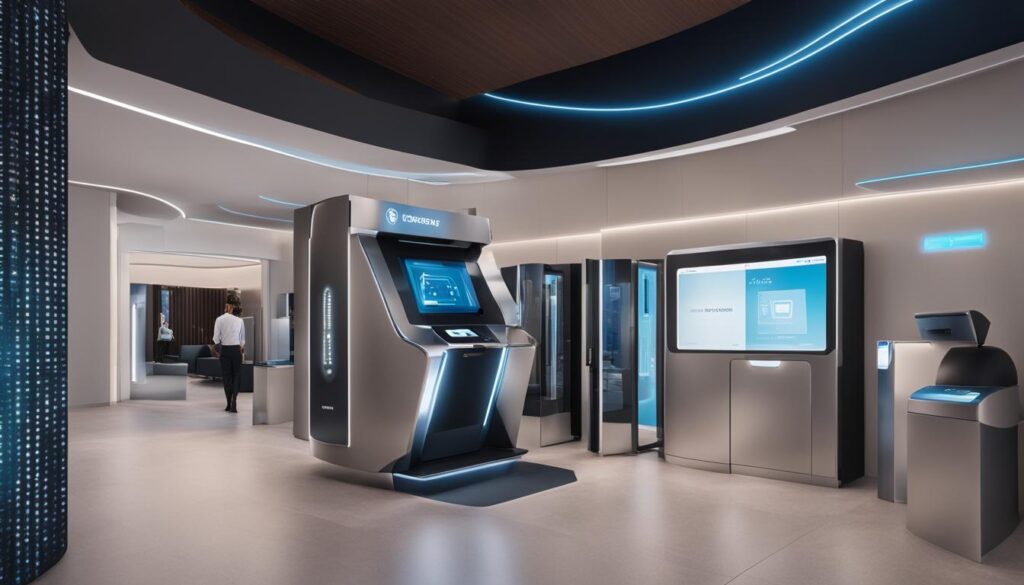
Artificial intelligence (AI) has emerged as a critical component in the banking and finance sector, revolutionizing the industry in diverse ways. One of the key areas where AI excels is in ensuring security and protecting against fraud.
Using advanced algorithms, AI analyzes transaction patterns to detect any suspicious activity and identify potential fraudulent transactions. By continuously monitoring and assessing the vast amounts of data generated in banking operations, AI-driven security systems can quickly identify and respond to potential threats.
AI-driven security systems in banking and finance act as an extra layer of protection, safeguarding sensitive customer information and minimizing the risks associated with cyberattacks.
In addition to security, AI also plays a significant role in streamlining processes within the banking industry. Online banking has become increasingly popular, allowing customers to conduct transactions and access financial services remotely.
With AI, online banking platforms can offer personalized recommendations based on customers’ financial behaviors. These tailored suggestions help individuals make informed decisions about investments, savings, and financial planning.
AI-powered financial recommendations bring convenience and efficiency, ensuring that individuals receive relevant suggestions that align with their financial goals and aspirations.
AI-Driven Recommendations on Amazon
When it comes to personalized shopping, Amazon leads the way with its AI-driven recommendations. By harnessing the power of AI algorithms, Amazon gathers information about users’ preferences and buying habits to curate personalized product suggestions tailored to individual users. This not only enhances their shopping experience but also makes it more efficient and enjoyable.
Through machine learning and data analysis, Amazon’s AI algorithms analyze a user’s browsing and purchase history, as well as their interaction with products, to understand their interests and preferences. These insights enable Amazon to deliver product recommendations that align with the user’s unique tastes and needs.
Imagine searching for a new book, and Amazon presents you with a list of titles carefully selected based on your past reading preferences. Or shopping for a new tech gadget, and Amazon suggests devices that match your specific requirements and budget. These AI-driven recommendations take the guesswork out of online shopping, saving users time and helping them discover new products they might have otherwise missed.
With AI-powered personalized recommendations, Amazon offers a more tailored and relevant shopping experience. This not only benefits the users but also helps sellers and businesses reach their target audience more effectively. By showcasing products to users who are more likely to be interested, AI-driven recommendations contribute to increased sales and customer satisfaction.
Benefits of AI-Driven Recommendations on Amazon:
- Time-saving: AI-powered recommendations help users find products quickly without the need for extensive search or browsing.
- Discovery of new products: Personalized recommendations introduce users to products they might not have considered otherwise, expanding their options and broadening their shopping experience.
- Enhanced customer satisfaction: By accurately catering to individual preferences, AI-driven recommendations increase customer satisfaction and add value to the shopping journey.
- Increased sales: Personalized recommendations lead to higher conversion rates as users are more likely to make purchases when presented with products that align with their interests.
With Amazon’s AI-driven recommendations, personalized shopping has never been easier or more enjoyable. Through the intelligent application of AI algorithms, Amazon continues to redefine the online shopping experience, offering users a seamless and personalized journey from discovery to purchase.
| Customer Testimonials | Reviews |
|---|---|
| “I love how Amazon suggests products that I’m actually interested in. It saves me so much time!” – Emily | ⭐⭐⭐⭐⭐ |
| “The personalized recommendations on Amazon have introduced me to some of my favorite products. They really understand my taste!” – Daniel | ⭐⭐⭐⭐⭐ |
| “Amazon’s recommendations are spot on! I always find something I need or want in their personalized suggestions.” – Sarah | ⭐⭐⭐⭐⭐ |
Conclusion
Artificial intelligence has seamlessly integrated into our daily lives, revolutionizing the way we interact with technology and shaping our everyday experiences. From unlocking our smartphones with face ID to receiving personalized social media feeds, AI enhances convenience and efficiency in surprising ways.
AI-driven tools like Grammarly help us compose error-free emails, while email filters prevent spam and fraudulent activities, ensuring our online communications remain secure. In addition, AI-powered Google searches deliver accurate and personalized results, making information retrieval more efficient than ever.
Furthermore, digital voice assistants have become our virtual companions, responding to our voice commands and providing assistance in various tasks. Smart home devices, enabled by AI, adapt to our preferences to make our living spaces more comfortable and efficient. AI also enhances commuting and travel experiences, offering real-time traffic updates and self-driving car systems for smoother journeys.
AI’s impact extends to the realm of finance, where it detects fraudulent activities and provides personalized recommendations. Even on platforms like Amazon, AI-driven recommendations streamline the shopping process and help users discover products tailored to their preferences.
Overall, the everyday impact of AI is undeniable. Understanding and embracing the ways AI enhances our lives enables us to fully appreciate the potential of this transformative technology.
FAQ
How does AI impact our daily lives?
AI impacts our daily lives in various surprising ways, from unlocking our smartphones using face ID to personalizing our social media feeds. It enhances security, makes our experiences more efficient, and adapts to our needs.
What is facial recognition technology?
Facial recognition technology, such as face ID on smartphones, uses AI algorithms to capture and compare an image of a person’s face with stored data. This technology enhances security and makes it more convenient to unlock our phones.
How does AI personalize our social media feeds?
AI algorithms analyze our past behavior and engagement on social media platforms like Facebook, Twitter, and Instagram to determine the content that aligns with our preferences. It helps in showing us relevant posts, friends, and suggestions.
How does AI improve our email and messaging experience?
AI-powered tools like Grammarly and spell check use AI and natural language processing to help us draft error-free messages. AI filters in email services block spam, categorize messages, and detect fraudulent email activities for enhanced security.
How does AI enhance our Google search experience?
Google search relies on AI algorithms to analyze our search history and provide personalized search results and ads based on our preferences. This makes our search experiences more efficient and helps us find accurate and relevant information.
How do digital voice assistants work?
Digital voice assistants like Siri, Alexa, and Google Assistant utilize natural language processing and machine learning to understand and respond to our voice commands. They offer convenience and assistance in answering questions and providing directions.
How do smart home devices utilize AI?
Smart home devices, such as smart thermostats and refrigerators, use AI to learn our preferences and adapt to our needs. They adjust temperature settings, create grocery lists, and even suggest wine pairings, making our lives more comfortable and efficient.
How does AI improve our commuting and travel experiences?
AI-powered apps like Google Maps provide real-time traffic updates, suggest alternate routes, and estimate travel time. AI navigation systems in cars, including self-driving cars, ensure smoother and safer journeys.
What role does AI play in banking and finance?
AI analyzes transaction patterns to detect suspicious activity and identify potential fraudulent transactions, ensuring security in banking and finance. It also streamlines processes like online banking and provides personalized recommendations based on financial behaviors.
How does AI-driven recommendations work on Amazon?
Amazon uses AI algorithms to gather information about users’ preferences and buying habits. This enables personalized product recommendations that are tailored to individual users, making their shopping experience more efficient and personalized.
Source Links
- https://www.forbes.com/sites/bernardmarr/2019/12/16/the-10-best-examples-of-how-ai-is-already-used-in-our-everyday-life/?sh=e0f48901171f
- https://towardsdatascience.com/how-artificial-intelligence-is-impacting-our-everyday-lives-eae3b63379e1
- https://www.linkedin.com/pulse/10-surprising-applications-ai-your-daily-life-alexander-stahl