Artificial Intelligence (AI) is revolutionizing various industries and shaping the future with its innovative solutions. From healthcare to finance, AI is having a significant impact. It has the ability to perform tasks that typically require human intelligence, such as visual perception, decision-making, and language translation. Recent advancements in computing power and machine learning algorithms have fueled the rapid growth of AI. It has increased efficiency and productivity in sectors like healthcare and finance, while also solving complex problems like climate change and disease. However, there are concerns about job displacement and bias in AI systems. It is crucial for society to address these challenges and ensure the responsible and ethical development and deployment of AI.
Key Takeaways:
- AI is revolutionizing industries with its innovative solutions.
- Advancements in computing power and machine learning have fueled the rapid growth of AI.
- AI has increased efficiency, productivity, and solved complex problems in sectors like healthcare and finance.
- There are concerns about job displacement and bias in AI systems.
- Addressing these challenges is crucial for the responsible and ethical development and deployment of AI.
The rise of AI is transforming industries and paving the way for a more connected, efficient, and innovative future. It has the potential to reshape how we live, work, and interact. As AI continues to evolve, it is essential for individuals, organizations, and governments to adapt and embrace the transformative power of this technology. By harnessing the capabilities of AI while addressing ethical considerations, we can create a future where AI and human intelligence collaborate to solve complex problems and drive innovation.
The Transformative Power of AI in Different Industries
Artificial Intelligence (AI) is not just a buzzword; it is fundamentally transforming numerous industries and bringing forth new possibilities and advancements. Let’s explore how AI is revolutionizing healthcare, finance, manufacturing, and the media industry.
AI in Healthcare
In healthcare, AI is proving to be a game-changer. By analyzing complex medical data, AI algorithms can provide accurate diagnoses and personalized treatment strategies. This technology enables healthcare professionals to make informed decisions based on data-driven insights, leading to improved patient care and outcomes. AI is also driving advancements in areas such as drug discovery, precision medicine, and telehealth.
AI in Finance
The finance industry is embracing AI to enhance efficiency and customer experiences. Real-time data analysis, powered by AI, enables financial institutions to identify trends, detect fraud, and make informed investment decisions. AI-driven chatbots provide seamless customer service, responding to queries and resolving issues promptly. With AI algorithms continuously learning and adapting, the finance industry is becoming more agile and data-driven than ever before.
AI in Manufacturing
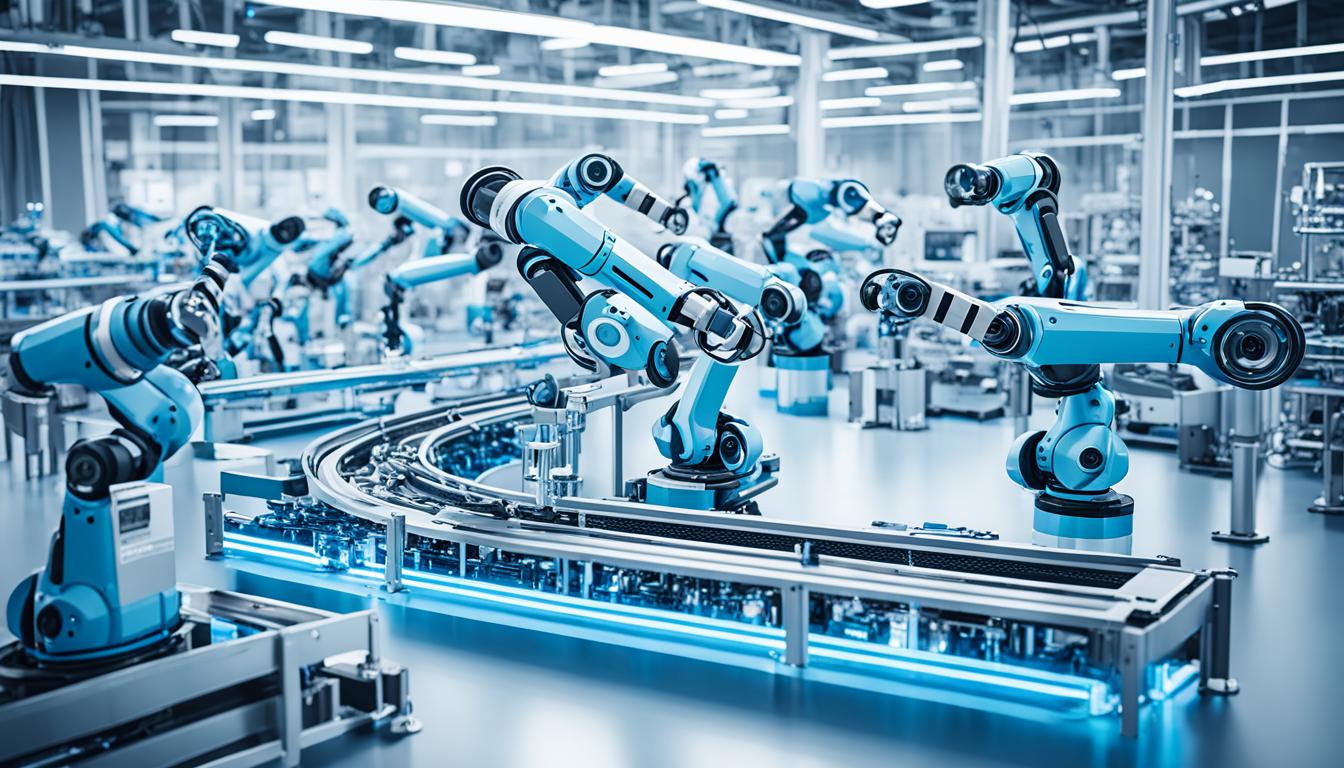
Manufacturing is experiencing a renaissance with the integration of AI-driven technologies. Internet of Things (IoT) devices, combined with AI algorithms, are optimizing production processes and enabling predictive maintenance. AI-powered automation is streamlining workflows, reducing downtime, and increasing productivity. With AI, manufacturers can identify bottlenecks, optimize resource allocation, and improve overall operational efficiency.
AI in Media
In the media industry, AI is revolutionizing content creation and personalization. AI algorithms can analyze vast amounts of data to curate tailored content recommendations based on viewers’ preferences. This technology is reshaping how news and entertainment are delivered, ensuring that users receive content that aligns with their interests and preferences. AI is also being used to automate content generation, freeing up valuable time for creatives to focus on more complex tasks.
As industries across the board continue to embrace AI, the potential for innovation, efficiency, and enhanced customer experiences expands. The transformative power of AI is evident in healthcare, finance, manufacturing, and the media industry, where AI-driven solutions are driving significant advancements and optimizing processes. By harnessing the capabilities of AI, these industries can stay on the cutting edge and deliver exceptional results.
Ethical Considerations and Future Prospects of AI
As artificial intelligence (AI) continues to transform various sectors, ethical concerns related to data privacy, algorithm bias, and job displacement have emerged. It is important to strike a balance between innovation and accountability in order to fully harness the potential of AI.
Data privacy is a key ethical concern when it comes to AI. The collection and use of massive amounts of data raise questions about individuals’ rights and how their personal information is safeguarded. It is essential to implement robust data protection measures and ensure transparency in how data is used and shared.
Algorithm bias is another critical issue to address. AI systems are built on algorithms that learn from data, and if the data used is biased or discriminatory, it can result in unfair outcomes. To mitigate algorithm bias, it is crucial to have diverse and representative datasets and ensure regular audits and evaluations of AI systems to detect and correct any biases that may arise.
“The development and deployment of AI should always prioritize ethical considerations to prevent unintended consequences and harm.”
Job displacement is a concern as AI automation replaces certain tasks traditionally performed by humans. While AI may eliminate certain jobs, it also has the potential to create new ones and enhance productivity. It is important to invest in reskilling and upskilling programs to enable workers to adapt to the changing job landscape and ensure a smooth transition.
“Ethical considerations are paramount to ensure the responsible and beneficial use of AI for the betterment of society.”
Looking to the future, the prospects of AI are vast and promising. AI has the potential to revolutionize areas such as drug development, weather forecasting, and autonomous vehicles. By leveraging AI’s capabilities, we can accelerate the discovery of life-saving drugs, improve the accuracy of weather predictions, and create safer and more efficient transportation systems.
Collaboration between human inventiveness and machine intelligence will be crucial in unlocking the full potential of AI. By working hand in hand with AI systems, humans can enhance their problem-solving abilities and leverage AI’s processing power to tackle complex challenges.
“The future prospects of AI are bright, offering the potential for a more connected, efficient, and innovative world.”
Overall, while ethical concerns need to be addressed, the future prospects of AI are incredibly promising. By navigating the ethical considerations, we can harness the transformative power of AI and create a future where technology and humanity work together for the benefit of all.
Conclusion
The future of AI holds immense potential for transforming industries and shaping a more connected and efficient world. Collaboration between human creativity and machine intelligence is at the heart of driving innovation in various sectors. While AI disrupts traditional business structures, it is crucial to address ethical concerns and ensure accountability to harness its full power.
AI has the ability to improve efficiency, solve complex problems, and drive innovation across industries. By embracing AI and using it responsibly, society can create a more connected and innovative future. However, it is important to strike a balance between innovation and ethics to ensure the responsible development and deployment of AI.
In this connected world, the future of AI relies on collaboration and cooperation between humans and machines. By leveraging the potential of AI, we can optimize processes, improve decision-making, and create innovative solutions for complex challenges. Together, we can usher in a future where AI enables us to achieve greater efficiency and innovation in every aspect of our lives.
FAQ
How is AI revolutionizing industries?
AI is revolutionizing industries by introducing innovative solutions and advancements. It has the ability to perform tasks that typically require human intelligence and has increased efficiency and productivity in sectors like healthcare and finance, while also solving complex problems like climate change and disease.
In which industries is AI having the greatest impact?
AI is having a significant impact on various industries. In healthcare, it is revolutionizing patient care by analyzing complex medical data, enabling accurate diagnoses, and personalized treatment strategies. In finance, it is being used for real-time data analysis, risk management, and customer service through chatbots. The manufacturing industry is benefiting from AI-driven technologies like IoT devices and AI algorithms optimizing production processes. AI is also reshaping the media industry with its creative skills in content creation and personalization.
What are the ethical concerns related to AI?
Ethical concerns related to AI include data privacy, algorithm bias, and job displacement. It is important to address these concerns to balance innovation and accountability and ensure responsible and ethical development and deployment of AI.
What are the future prospects of AI?
The future prospects of AI are enormous. Advances in drug development, weather forecasting, and autonomous vehicles are some of the areas where AI can have a transformative impact. Collaboration between human inventiveness and machine intelligence will pave the way for a more connected, efficient, and innovative world.
How can society embrace AI responsibly?
Society can embrace AI responsibly by ensuring accountability and addressing ethical concerns. By using AI in a responsible manner, society can create a more connected, efficient, and innovative future.