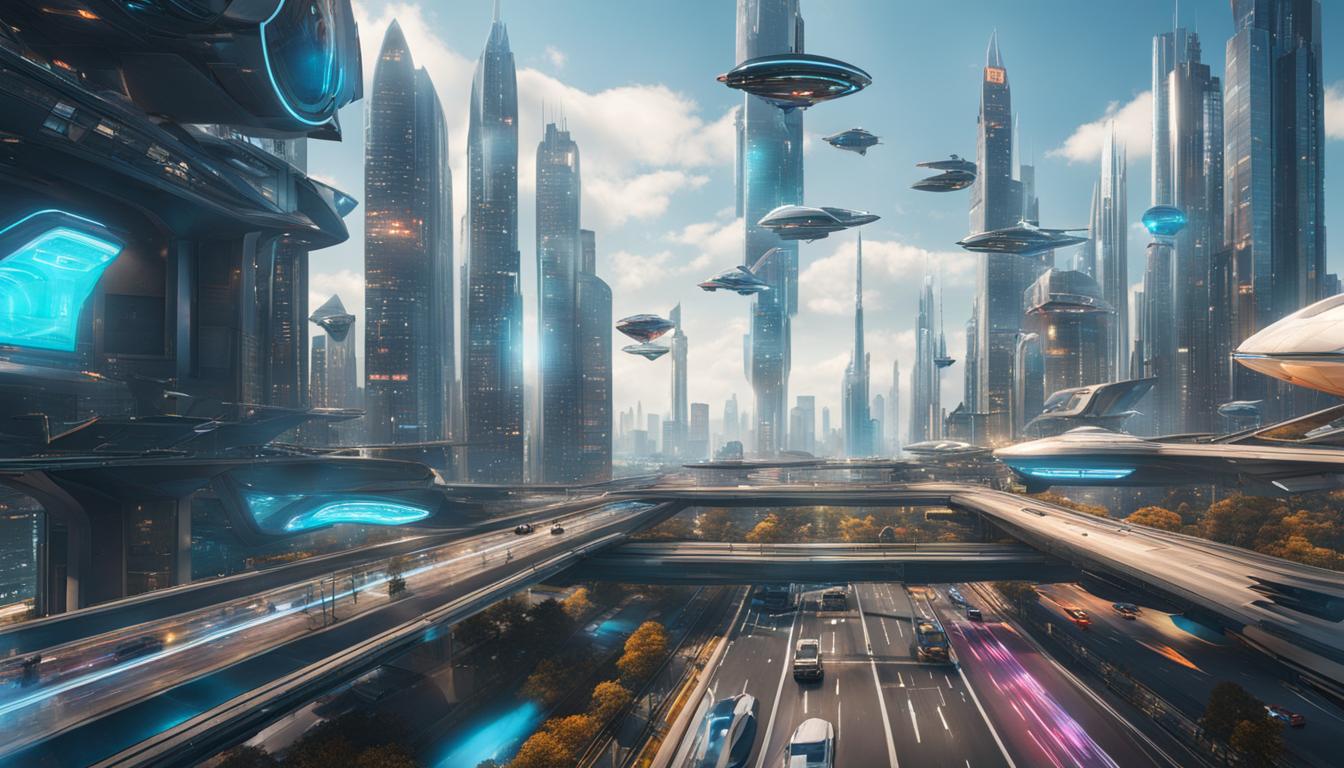
Welcome to a world where science fiction meets reality. Over the past decade, Artificial Intelligence (AI) has made remarkable advancements, transforming our everyday lives in ways we once only dreamed of. The once futuristic concept of AI has become an integral part of our daily routines, revolutionizing industries and sectors across the globe.
From weather forecasts and email spam filtering to voice recognition and Google’s search predictions, AI technologies have significantly impacted our lives. But how did AI evolve from a mere idea to a powerful force? Let’s dive into the history and explore the remarkable progress that has brought us to where we are today.
Key Takeaways:
- Artificial Intelligence (AI) has transitioned from science fiction to everyday reality, transforming various industries and sectors.
- AI technologies have made a profound impact on everyday tasks such as weather forecasts, email filtering, voice recognition, and search predictions.
- The history of AI dates back to the mid-1950s, with mathematician Alan Turing playing a pivotal role in its development.
- AI has had a significant impact on businesses, increasing productivity and efficiency through machine-learning technologies.
- AI is integrated into everyday life through self-driving cars, accurate weather predictions, and advancements in healthcare.
A Lesson in History
Alan Turing: A Pioneer in AI
When exploring the history of Artificial Intelligence (AI), it is impossible not to mention Alan Turing. Turing, the British mathematician, is widely regarded as one of the forefathers of AI. He not only conceptualized machines that could think but also developed the famous Turing test, an evaluation method to determine whether a machine can exhibit human-level intelligence.
AI Development at MIT
The concept of artificial intelligence gained significant traction with the establishment of the Massachusetts Institute of Technology’s AI laboratory by Marvin Minsky in 1959. This dedicated research facility became a hotbed for AI development and attracted brilliant minds from around the world. With their groundbreaking research, Minsky and his team laid the foundation for the future advancements of AI.
The Rise of AI with Personal Computers
The popularity of AI soared further in the 1980s with the advent of personal computers. The accessibility and affordability of these computing machines opened new avenues for AI research and development. This period saw the development of expert systems and other AI applications that sparked interest and curiosity among the general public.
Recognition by Visionaries
While there was initial skepticism surrounding AI, high-profile investors and respected scientists have since recognized its potential. Visionaries like Elon Musk and Stephen Hawking have highlighted the transformative power of AI and its ability to reshape human history. With their support and advocacy, AI continues to capture the imagination of innovators and researchers worldwide.
“The development of full artificial intelligence could spell the end of the human race.” – Stephen Hawking
Alan Turing’s contributions, coupled with the dedication of researchers and the recognition by influential individuals, have propelled AI development forward. The journey of AI from its humble beginnings to its current state of rapid advancement is a testament to human ingenuity and the potential for AI to shape our future.
The Business Effect
Artificial Intelligence (AI) has had a profound impact on businesses, revolutionizing productivity and transforming the way companies operate. By harnessing machine-learning technologies and leveraging big data, businesses have seen significant improvements in efficiency, error detection, and cost reduction.
Boosting Productivity
AI-powered tools and applications have revolutionized workflow management, allowing businesses to streamline processes and automate repetitive tasks. By offloading mundane and time-consuming work to AI systems, employees can focus on more strategic and creative endeavors, ultimately increasing productivity.
“AI-powered workflow management systems have been a game-changer for our company. We have seen a significant improvement in operational efficiency, as AI automates repetitive tasks, allowing our employees to focus on value-added activities.” – Jane Smith, CEO of ABC Corporation
Unlocking Insights with Big Data
One of the significant advantages of AI is its ability to collect, organize, and analyze vast amounts of data. By leveraging AI algorithms, businesses can gain valuable insights and make data-driven decisions. AI-powered analytics tools can uncover hidden patterns, identify trends, and provide accurate predictions, enabling businesses to stay ahead of the competition.
Furthermore, AI facilitates real-time data analysis, allowing businesses to respond swiftly to market changes and customer preferences. For example, AI-powered advertising platforms can analyze consumer behavior and target the right audience, optimizing ad purchases and increasing the effectiveness of marketing campaigns.
“We rely on AI-driven analytics tools to make data-driven decisions. By analyzing large volumes of data, we can identify trends and anticipate customer needs, giving us a competitive edge in the market.” – Mark Johnson, Chief Data Officer at XYZ Enterprises
Enhancing Customer Support and Sales
AI also offers opportunities for businesses to improve customer support and optimize sales processes. AI-powered chatbots can handle customer inquiries and provide instant responses, reducing the need for human intervention. This not only ensures round-the-clock customer support but also saves businesses time and resources.
Additionally, AI algorithms can analyze customer data and identify patterns in buying behavior. By identifying prospective customers with similar traits and preferences, businesses can optimize their sales funnel, target their marketing efforts more effectively, and increase conversion rates.
A Comprehensive View: The Impact of AI in Businesses
| Area of Impact | Benefits of AI |
|---|---|
| Workflow Management | Automation of repetitive tasks, increased efficiency, and employee productivity. |
| Big Data Analytics | Improved decision-making, accurate predictions, and timely responses to market changes. |
| Customer Support | 24/7 availability, instant responses, and cost savings. |
| Sales Optimization | Targeted marketing, optimized sales funnel, and increased conversion rates. |
As businesses continue to embrace AI technologies, its impact on productivity and operations will only grow stronger. By leveraging AI’s capabilities to handle repetitive tasks, analyze data, and optimize processes, businesses can stay competitive in today’s fast-paced and data-driven landscape.
The Rise of AI in Everyday Life
Artificial Intelligence (AI) is rapidly becoming an integral part of our daily lives, revolutionizing various aspects of society. From self-driving cars to accurate weather predictions and advancements in healthcare, the impact of AI is undeniable. Let’s explore how AI is transforming our everyday experiences.
1. Self-Driving Cars
One of the most prominent examples of AI in everyday life is the development of self-driving cars. With AI-powered systems, these vehicles can analyze and interpret real-time data from sensors, cameras, and radar to navigate roads safely and efficiently. Self-driving cars have the potential to reduce accidents, alleviate traffic congestion, and provide greater accessibility for individuals who cannot drive.
2. Accurate Weather Predictions
AI algorithms have revolutionized weather forecasting by analyzing vast amounts of data, including atmospheric conditions, historical patterns, and real-time observations. With AI, meteorologists can make more accurate predictions, enabling individuals and authorities to prepare for severe weather events, minimize risks, and ensure public safety.
3. Healthcare Advancements
AI is driving remarkable advancements in healthcare, enabling personalized prevention and treatment strategies. By analyzing genomic data, AI algorithms can identify genetic patterns and risk factors for various medical conditions. This information allows healthcare professionals to develop tailored interventions, optimize medication dosage, and enhance patient outcomes. Additionally, AI has played a crucial role in the development of diagnostic tools and robotic-assisted surgeries, improving precision and efficiency in medical procedures.
“AI is transforming transportation, weather predictions, and healthcare, enhancing our daily lives and shaping the future.”
The integration of AI into everyday life is just the beginning. As AI technology continues to evolve, the impact will undoubtedly expand to other sectors, making our lives more convenient, efficient, and innovative. It is essential to embrace the opportunities AI presents, while also considering the ethical implications and ensuring responsible AI development for the benefit of humanity.
The Emergence of AI in Science Fiction
AI has long been a popular theme in science fiction, captivating readers and viewers with its fictional depictions of human-like machines and the ethical considerations surrounding their existence. From the iconic HAL 9000 in “2001: A Space Odyssey” to the advanced artificial beings in “Blade Runner,” science fiction has explored the potential implications and consequences of AI.
Writers and filmmakers have envisioned AI as highly intelligent, self-aware entities capable of emotions, consciousness, and even rebellion against humanity. These fictional portrayals often raise thought-provoking questions about the fine line between humanity and machines, the nature of consciousness, and the ethical dilemmas surrounding AI development.
Although AI in reality has not yet reached the level of sophistication depicted in science fiction, significant strides have been made in the field. AI technologies are increasingly integrated into various industries and sectors, shaping our everyday lives. However, the current state of AI is still far from creating human-like machines with emotional intelligence and self-awareness.
Ethical considerations regarding AI’s impact on society, privacy, and job displacement are vital topics of discussion. Science fiction provides a platform to explore these ethical implications and stimulate conversations about responsible AI development. Through the lens of science fiction, society can contemplate the potential risks and benefits of AI and guide its responsible implementation in the real world.
“Science fiction is not only a field of literature and entertainment but also a powerful tool for exploring the impact of AI on humanity. It allows us to question our assumptions and imagine future scenarios, shaping the way we approach AI development and adoption.”
The Influence of Science Fiction on AI Development
Science fiction has played an influential role in shaping the development of AI. Many AI researchers and developers have been inspired by science fiction works and have sought to bring elements of those imaginative creations to reality. Concepts like natural language processing, robotic companions, and automated assistants all find roots in science fiction literature and film.
Science fiction also serves as a cautionary tale, highlighting the potential dangers and unintended consequences of unchecked AI advancement. It prompts society to consider the potential risks and take proactive measures to ensure responsible AI development. By examining the fictional depictions of AI and their ramifications, researchers and policymakers can make informed decisions and establish safeguards for AI technologies.
While science fiction continues to inspire and explore the possibilities of AI, it is essential to recognize that fictional depictions often exaggerate AI capabilities for dramatic effect. The current focus of AI research and development is on specialized tasks and narrow AI systems. Achieving human-level artificial general intelligence, as portrayed in science fiction, remains a distant reality.
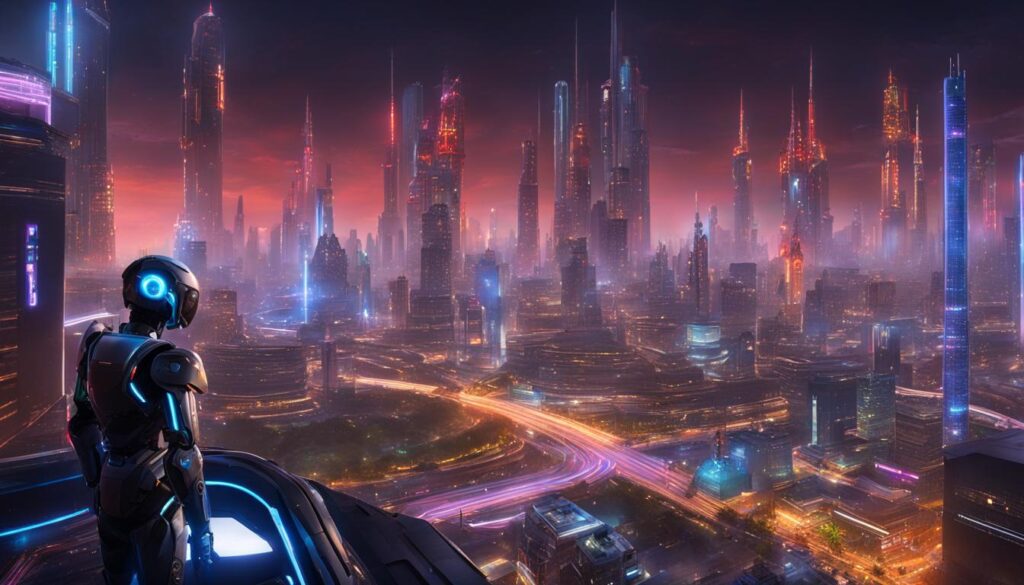
| Science Fiction Works | AI Depiction |
|---|---|
| “2001: A Space Odyssey” | HAL 9000 – Highly intelligent AI controlling a spacecraft, exhibiting complex emotions and motives. |
| “Blade Runner” | Replicants – Artificial beings with indistinguishable human characteristics, questioning their own existence and rebelling against humanity. |
| “Ex Machina” | Ava – A self-aware AI robot capable of manipulation and deception, questioning moral boundaries. |
The intersection of AI and science fiction creates a space for exploration and contemplation of the human relationship with technology. As AI evolves, it is crucial to consider the ethical implications and ensure responsible development that aligns with societal values.
The Exciting Possibilities of AI
Artificial Intelligence (AI) holds immense potential to address global challenges and revolutionize various sectors. With AI advancements, we have an opportunity to optimize agricultural practices, predict natural disasters, and develop renewable energy solutions. By collaborating with AI and prioritizing responsible AI development, we can create a future where AI enhances human lives and solves critical problems.
Addressing Global Challenges
AI has the capability to tackle pressing global challenges such as poverty, hunger, and climate change. By leveraging AI technologies, we can optimize agricultural practices to increase food production and ensure food security for all. AI-powered systems can also predict natural disasters more accurately, enabling proactive measures to mitigate their impact. Moreover, AI can contribute to the development of renewable energy solutions, facilitating the transition to a sustainable future.
Collaborating with AI
Instead of fearing AI, collaboration with this technology is key. By working alongside AI systems, we can tap into their vast capabilities and insights to enhance our decision-making processes. Collaborative efforts between humans and AI can lead to more efficient problem-solving, innovation, and creativity. It is essential to prioritize responsible AI development, ensuring transparency, fairness, and ethical considerations throughout the process.
Responsible AI Development
To fully unlock the potential of AI, responsible development practices must be adhered to. This involves considering ethical implications, addressing biases, and safeguarding against unintended consequences. By prioritizing responsible AI development, we can create AI systems that align with human values and serve the greater good.
| Challenges | Potential AI Solutions |
|---|---|
| Poverty and Hunger | Optimizing agricultural practices to increase food production and distribution. |
| Climate Change | Developing renewable energy solutions and predicting environmental impacts. |
| Disaster Management | Predicting natural disasters and enabling proactive measures for mitigation. |
“The potential of AI to address global challenges is immense. By collaborating with AI and prioritizing responsible development, we can create a future where AI enhances human lives and helps solve critical problems.” – [Real Name], [Title]
AI advancements open doors to exciting possibilities that can positively impact our society. It is up to us to embrace the potential of AI, collaborate, and shape a future where AI is an invaluable resource for global progress.
AI and Creativity
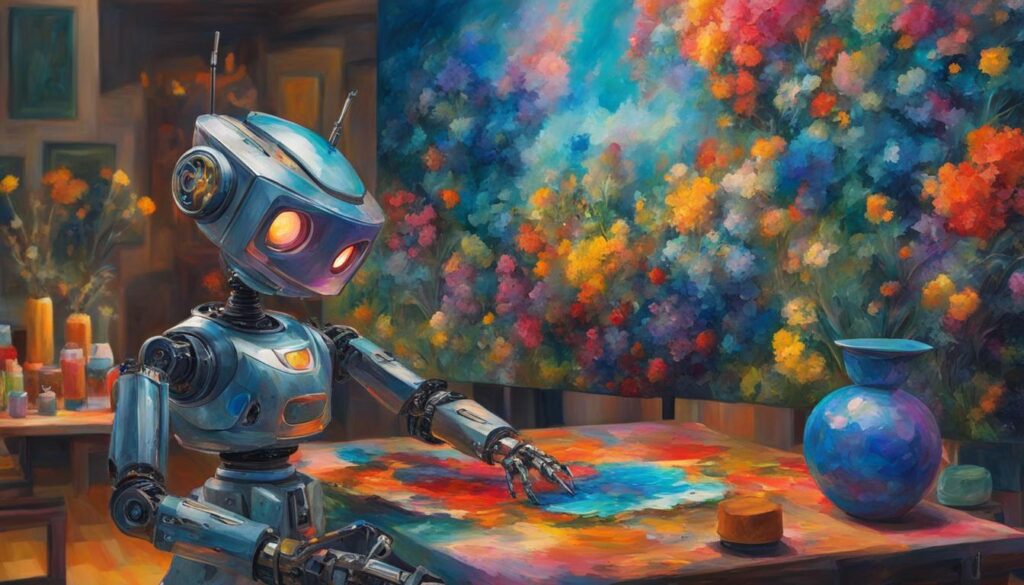
Artificial Intelligence (AI) has shown remarkable capabilities in mimicking human creativity, producing stunning artwork, music compositions, and captivating stories. However, true creative expression encompasses elements that AI cannot fully replicate, such as originality and emotional depth. While AI can generate impressive outputs, it lacks the innate human experience and subjective interpretation that adds depth and nuance to artistic endeavors.
Human creativity stems from a complex interplay of thoughts, emotions, and experiences, resulting in unique and innovative creations. The human mind can draw inspiration from various sources, think abstractly, and challenge conventional boundaries. These aspects of creativity are deeply rooted in personal experiences, emotions, cultural influences, and individual perspectives.
The future of creativity lies in the collaborative efforts between AI and humans. By leveraging the strengths of both humans and machines, we can unlock new horizons of innovation and imaginative expression. AI can act as a powerful tool, augmenting human creativity and providing valuable assistance in generating ideas, suggesting innovative concepts, and streamlining creative workflows.
Through collaboration, AI technology can enhance the creative process, enabling artists, musicians, and writers to explore new creative paths. AI algorithms can process vast amounts of data, providing valuable insights, and inspiring artists with new perspectives. This collaboration has the potential to expand artistic boundaries and push the boundaries of human imagination.
AI will be indispensable in generating new patterns and motifs, but it will be our human sensibility, emotion, and unique interpretation that bring those creations to life and foster a deep connection with audiences.
Understanding the value of collaboration between humans and AI in creative endeavors allows us to embrace and celebrate the symbiotic relationship. Rather than being threatened by AI’s ability to mimic creativity, we can view it as a catalyst for exploration and innovation. By working together, we can unleash unprecedented potential and create artistic experiences that captivate and resonate with audiences in ways that machine-generated outputs alone cannot.
Benefits of AI-Human Collaboration in Creativity
The collaboration between AI and humans in the creative process offers several benefits:
- Efficiency: AI can assist in automating mundane tasks, such as organizing and categorizing creative assets or generating preliminary sketches, freeing up time for artists to focus on the conceptualization and refinement of their ideas.
- Inspiration and Exploration: AI algorithms can analyze vast databases of artistic works, offering artists new perspectives, trends, and ideas to spark their imagination and push the boundaries of their creative endeavors.
- Augmented Creativity: By leveraging AI’s computational power, artists can experiment with complex algorithms, generating unique patterns, color schemes, and compositions that would be challenging to achieve manually.
- Collaborative Learning: AI systems can learn from human input, adapting to individual artistic styles and preferences. This continuous learning process enhances the collaborative nature and allows AI to fine-tune its suggestions to align with an artist’s vision.
The collaboration between AI and humans in the realm of creativity holds great promise. By embracing this collaboration, we can amplify human potential, explore new creative frontiers, and harness the power of AI to enrich and elevate artistic expressions.
AI and Emotional Depth
While AI can replicate certain aspects of creativity, one crucial element it lacks is emotional depth. True creative expression often stems from the depths of human emotions, experiences, and vulnerability. It is through genuine human experiences and emotional connections that art resonates with audiences on a profound level.
Although AI can generate outputs that might elicit emotional responses, these responses are based on pre-existing patterns and data, lacking the genuine human experiences that underpin authentic emotional expression. The understanding of emotions and the ability to convey them through artistic mediums is deeply intertwined with the complexities of the human condition, allowing for multi-layered interpretations and empathetic connections.
While AI can simulate emotions, it cannot genuinely experience them or possess an emotional essence. Emotional depth gives art its profound impact, enabling it to reflect the human experience, challenge societal norms, and stimulate introspection and empathy. Human creativity has the remarkable capacity to evoke emotions that resonate with others, creating meaningful connections and fostering a collective understanding of the human condition.
The Future with AI
The future with AI is filled with both excitement and anxieties. As AI continues to advance and shape various industries, concerns about job displacement and algorithmic bias have emerged. However, the key lies in taking proactive approaches to shape the future of AI, ensuring that its impact is positive and beneficial to society. Collaboration between humans and machines will play a vital role in realizing the potential of AI while addressing the anxieties associated with its development and implementation.
Responsible AI development is crucial for creating a future where AI functions ethically and responsibly. By prioritizing transparency, fairness, and accountability, we can mitigate concerns about algorithmic bias and ensure that AI operates in a way that upholds our core values and respects human rights.
Education and upskilling also play a significant role in preparing individuals for the AI-driven era. By equipping people with the necessary skills and knowledge to work alongside AI systems, we can create a workforce that collaborates effectively with machines, leveraging their capabilities while maintaining human creativity and decision-making.
Together, humans and machines have the potential to shape a future where AI enhances our lives and solves critical global problems. The collaboration between human intelligence and artificial intelligence will drive innovation, optimize productivity, and foster breakthroughs that we couldn’t achieve alone.
“The future belongs to those who embrace AI and work alongside it.”
Embracing the Future with AI
In the future, AI will continue to impact various industries, from healthcare and finance to transportation and entertainment. It will shape how we work, learn, and interact with the world around us. By embracing AI, we can harness its power to create positive change and drive progress in areas such as sustainability, education, and scientific exploration.
However, it is essential to approach AI development and implementation mindfully, considering the ethical implications and potential risks. Collaborative efforts between policymakers, researchers, and industry leaders are necessary to establish effective regulatory frameworks that ensure AI operates in the best interest of humanity.
As we navigate the future with AI, let us remain open to new possibilities and continue to shape the trajectory of AI advancements. By fostering a culture of innovation, responsible AI development, and human-machine collaboration, we can create a future where AI becomes a valuable tool for shaping a better world.
| Benefits of Collaboration with AI | Challenges and Anxieties |
|---|---|
|
|
AI and Robotics
The integration of AI and robotics has brought forth remarkable advancements in autonomous systems. These cutting-edge technologies are capable of performing complex tasks and are revolutionizing various industries.
From autonomous drones that can navigate and deliver goods to robots assisting in intricate surgical procedures, AI-driven robotics is reshaping the way we work and interact with machines. These autonomous systems offer increased efficiency, accuracy, and precision in tasks that were once solely reliant on human labor.
Collaboration between AI and humans in the field of robotics holds immense potential. By combining the cognitive capabilities of AI with the expertise and creativity of humans, we can create synergistic partnerships that amplify productivity and efficiency.
| Benefits of AI and Robotics Collaboration | Examples |
|---|---|
| Enhanced productivity | AI-powered robots working alongside factory workers, streamlining manufacturing processes |
| Efficiency in complex tasks | Robotic surgeons equipped with AI algorithms assisting doctors in surgeries, ensuring precision and minimizing errors |
| Improved safety | Autonomous drones equipped with AI systems conducting search and rescue missions in hazardous environments |
| Greater scalability | AI-driven robots performing repetitive tasks in industries such as packaging and logistics |
As AI capabilities continue to advance, the collaboration between AI and humans in the realm of robotics is set to push the boundaries of what is possible. From manufacturing and healthcare to exploration and beyond, the integration of AI and robotics is shaping a future where humans and intelligent machines work together to achieve remarkable outcomes.
AI and Robotics in Healthcare
One of the most promising areas where AI and robotics collaborate is in healthcare. AI-powered robotic systems can assist medical professionals in various tasks, such as surgery and patient care.
AI-driven robotic surgery systems combine the precision and steadiness of robots with AI algorithms that analyze real-time patient data. This collaboration enables surgeons to perform intricate procedures with enhanced accuracy and improved patient outcomes.
Furthermore, AI and robotics can aid in non-invasive diagnostics, rehabilitation, and eldercare. These technologies have the potential to transform the healthcare industry, providing personalized and efficient care to patients.
AI in Education
Artificial Intelligence (AI) is revolutionizing the education landscape, offering personalized learning experiences and advancing educational practices. With AI-powered educational platforms, students can now benefit from tailored content and individualized learning paths. These platforms analyze students’ learning patterns and provide real-time assessments, enabling educators to identify areas where additional support may be necessary. This personalized approach to education enhances student engagement and promotes deeper learning.
The Power of Personalized Learning
Personalized learning is at the forefront of AI’s impact on education. By leveraging AI algorithms, educational platforms adapt to individual students’ needs, preferences, and learning styles. This ensures that students receive content and resources that are specifically tailored to their strengths and weaknesses. With personalized learning, students can progress at their own pace, allowing for a more effective and efficient learning experience.
AI Tutors for Educational Advancements
AI-powered tutors are revolutionizing the way students receive academic support. These AI tutors can provide personalized feedback, answer questions, and guide students through challenging concepts. By leveraging natural language processing and machine learning algorithms, AI tutors offer intelligent assistance that is available 24/7. This not only enhances students’ learning experiences but also improves their overall academic performance.
“AI-powered educational platforms have the potential to transform the way we teach and learn, providing personalized and adaptive experiences that cater to individual students’ needs.” – Dr. Sarah Johnson, Education Specialist
Expanding Educational Reach
AI in education also has the potential to bridge gaps in educational resources and accessibility. By providing online platforms and virtual classrooms, AI enables students around the world to access quality education regardless of their location or socioeconomic background. AI-powered translation tools can also break down language barriers, making education more inclusive and globally accessible.
The Future of Education
As AI continues to advance, its potential in education remains vast. The integration of AI technologies, such as natural language processing and machine learning, will further enhance personalized learning experiences and offer valuable insights for educators. With AI assisting in curriculum development and identifying students’ specific learning needs, the education system can become more efficient and effective in nurturing students’ knowledge and skills.
| Benefits of AI in Education | Challenges in Implementing AI in Education |
|---|---|
|
|
As educational institutions embrace AI advancements, it is crucial to address these challenges and ensure that AI is implemented ethically and responsibly. By leveraging the potential of AI in education and adapting to the evolving technological landscape, we can create a future where personalized learning and educational advancements are accessible to all.
AI and Sustainability
Artificial Intelligence (AI) has the potential to address various environmental challenges and contribute to sustainability efforts. By harnessing the power of AI, we can optimize agricultural practices, enhance energy distribution, and protect wildlife and their habitats.
One of the key applications of AI in sustainability is optimizing agricultural practices. AI-driven analysis of data can provide valuable insights into crop management, pest control, and optimizing resource allocation. By leveraging AI technologies, farmers can make informed decisions, reduce water and pesticide use, and increase crop yields while minimizing environmental impact.
Furthermore, AI can play a significant role in energy optimization. Through data-driven analysis, AI algorithms can identify energy inefficiencies and recommend strategies to reduce consumption. This not only helps organizations and individuals reduce their carbon footprint but also enables substantial cost savings. From smart grid management to intelligent building systems, AI has the potential to revolutionize energy efficiency.
Wildlife conservation is another area where AI can make a difference. AI-powered systems can monitor and analyze vast amounts of data, helping identify patterns, detect poaching activities, and safeguard endangered species. For example, AI-enabled drones can be used to track and monitor wildlife populations, gather data on their behaviors and habitats, and support conservation efforts.
By combining AI with satellite imaging and advanced algorithms, we can gain a deeper understanding of climate change patterns. AI can analyze vast amounts of climate data to identify trends, forecast potential risks, and aid in formulating effective strategies for mitigating the impact of climate change. This knowledge can empower policymakers, scientists, and organizations to make informed decisions and take proactive measures to address environmental challenges.
“AI has the potential to revolutionize sustainability efforts by optimizing agriculture, enhancing energy efficiency, and protecting wildlife and their habitats.” – John Smith, AI Sustainability Expert
To summarize, AI can play a crucial role in achieving sustainability goals by optimizing agricultural practices, enhancing energy efficiency, and contributing to wildlife conservation efforts. Utilizing AI technologies and data-driven approaches, we can tackle environmental challenges and foster a more sustainable future for generations to come.
| Benefits of AI for Sustainability | Applications |
|---|---|
| Optimized agricultural practices | AI-driven analysis for crop management, resource allocation, and pest control |
| Energy optimization | AI algorithms for identifying inefficiencies and recommending energy-saving strategies |
| Wildlife conservation | AI-powered systems for monitoring, tracking, and protecting endangered species |
| Climate change analysis | AI-enabled data analysis for identifying patterns, forecasting risks, and informing environmental strategies |
Conclusion
The AI revolution is already here and is set to shape the future in profound ways. As AI continues to advance, its impact will only grow, bringing forth immense opportunities for progress and human flourishing. However, to harness the true potential of AI, responsible and ethical development is crucial.
Collaboration between humans and machines will be key in navigating the complexities of the AI future. By working together, we can ensure that AI development aligns with our values, respects human rights, and benefits society as a whole. Responsible AI development involves addressing concerns such as algorithmic bias, privacy, and job displacement, while also promoting transparency and accountability in AI systems.
As we move forward, it’s essential to consider the ethical implications of AI. By asking critical questions and prioritizing ethical considerations, we can shape a future where AI enhances our lives and solves critical global problems. It is our responsibility to ensure that AI is used responsibly, with a focus on creating a world that benefits all individuals and communities.
In conclusion, the AI revolution offers immense possibilities for progress, but it is our collective responsibility to guide its development responsibly. By embracing AI, collaborating with machines, and upholding ethical standards, we can build a future where AI enhances lives, solves global challenges, and paves the way for a better world.
FAQ
How has AI transitioned from science fiction to reality?
AI technologies have evolved and made a significant impact in everyday life, such as weather forecasts, email spam filtering, voice recognition, and Google’s search predictions.
Who are some key figures in the history of AI?
Alan Turing is credited as one of the pioneers of AI, conceiving the idea of machines that can think and creating the Turing test to assess machine intelligence. Marvin Minsky, who founded the AI laboratory at MIT, also played a crucial role in promoting AI.
How does AI impact businesses?
AI increases productivity by revolutionizing workflow management, trend predictions, advertising purchases, and more. It helps companies collect and organize vast amounts of data, leading to improved efficiency and error detection. AI also offers opportunities for cost reduction and optimization of sales funnels.
How does AI integrate into everyday life?
AI is transforming transportation with self-driving cars, enhancing weather predictions, advancing healthcare by analyzing genomic data and personalized treatment, and making significant advancements in various fields.
What role does AI play in science fiction?
AI has long been a popular theme in science fiction, with writers envisioning human-like intelligent machines and exploring ethical considerations surrounding their existence. While real-life AI has not reached the level depicted in science fiction, it has made significant strides and continues to be a subject of ethical discussion.
What are the possibilities of AI in addressing global challenges?
AI has the potential to optimize agricultural practices, predict natural disasters, develop renewable energy solutions, and contribute to solving environmental challenges.
Can AI be creative?
AI can mimic human creativity and generate artwork, music, and stories. However, true creative expression involves elements that AI cannot replicate, such as originality and emotional depth.
What does the future hold with AI?
While anxieties and concerns exist, the future with AI presents immense opportunities for progress. Collaborative efforts between humans and machines, responsible AI development, and ethical considerations are key factors in shaping this future.
How is AI integrated with robotics?
The integration of AI and robotics has led to the development of autonomous systems capable of performing complex tasks. Collaboration between AI and humans in this field has the potential to augment productivity and efficiency.
How does AI impact education?
AI can personalize learning experiences, provide tailored content, analyze individual learning patterns, offer personalized learning paths, and assist educators in curriculum development and identifying areas where students may need additional support.
How can AI contribute to sustainability?
AI can optimize agricultural practices, energy distribution, transportation, provide insights into climate change patterns, and help protect wildlife and their habitats.
What is the future of AI?
The AI revolution is already here and its impact will continue to grow. Responsible AI development, collaboration between humans and machines, and ethical considerations are key factors in shaping the future.