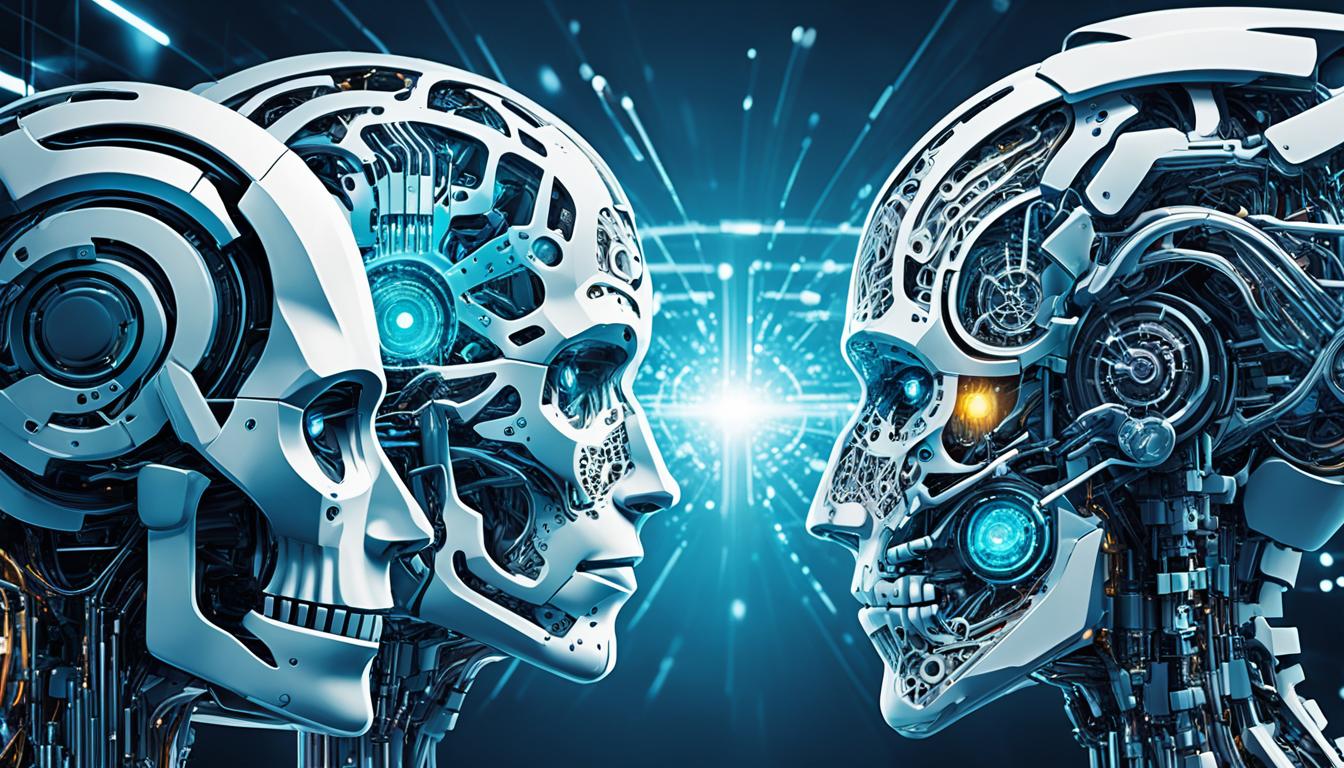
Artificial Intelligence (AI) has rapidly evolved and captured the imagination of scientists, tech enthusiasts, and the general public. From simple rule-based algorithms to deep learning models, AI has made significant advancements in mimicking human cognition and problem-solving abilities.
AI can be categorized into three groups: Artificial Narrow Intelligence (ANI), Artificial General Intelligence (AGI), and Artificial Superintelligence (ASI). ANI focuses on specific tasks, AGI aims to replicate human-level intelligence, and ASI surpasses human intellect. While the concept of superintelligence is theoretical, recent advancements in AI, such as OpenAI’s GPT-4, demonstrate the rapid progress in this field.
However, the rise of AI also presents challenges and ethical concerns. The transformative potential of AI raises emerging ethical frontiers, such as the impact on the workplace, intellectual property rights, misinformation, and decision-making. Policymakers, industry experts, and developers must collaborate to ensure that AI aligns with human values and ethics and promotes equitable use and distribution.
Key Takeaways:
- Artificial Intelligence (AI) has made significant advancements, mimicking human cognition and problem-solving abilities.
- AI can be categorized into three groups: Artificial Narrow Intelligence (ANI), Artificial General Intelligence (AGI), and Artificial Superintelligence (ASI).
- The rise of AI presents challenges and ethical concerns that require collaboration between policymakers, industry experts, and developers.
- Recent advancements in AI, such as OpenAI’s GPT-4, demonstrate the rapid progress in this field.
- Ensuring that AI aligns with human values and ethics is crucial for promoting equitable use and distribution.
The Power of the Human Brain and Its Relationship with AI
The human brain is an essential organ that plays a crucial role in the proper functioning of the body. Its importance cannot be overstated, as the brain is responsible for controlling our thoughts, emotions, movements, and sensations. But beyond these basic functions, the human brain is also an incredible storehouse of knowledge and memory.
The brain has an astonishing capacity to store vast amounts of information. In fact, it is estimated that the human brain has a digital memory of over two million gigabytes. This storage capacity allows us to accumulate knowledge and experiences throughout our lives, shaping who we are as individuals.
Moreover, the brain acts as a command center, constantly communicating with other organs to ensure their proper function. It receives information about the body’s various systems and processes, allowing it to regulate and maintain overall well-being. This intricate network of communication underscores the brain’s vital role in the coordination of the body’s activities.
Just like any other organ, the brain needs rest to recharge and maintain its optimal performance. Adequate sleep is essential for the brain’s well-being and functionality. During sleep, the brain consolidates memories, eliminates toxins, and restores energy levels. Lack of sleep can impair cognitive abilities, memory retention, and overall productivity. It’s crucial to prioritize quality rest to support brain health.
The brain’s influence extends beyond wakefulness, even into the realm of dreams. The brain’s ability to interpret and process dreams sheds light on its role in information processing and emotional regulation. Dreams provide valuable insights into our thoughts, fears, and desires, offering glimpses into the inner workings of our brains.
While the brain is undeniably important, it is essential to recognize that other organs also contribute to the overall functioning of the body. Each organ has a unique role to play, and the collective effort of all organs ensures our well-being and vitality.
Understanding the power and complexity of the human brain allows us to appreciate its role in shaping our existence. As we delve into the realm of artificial intelligence, it is through the lens of the intricate human brain that we explore the potential and limitations of AI.
“The human brain is an amazing and powerful organ, capable of extraordinary feats. Its relationship with AI opens up new possibilities and avenues for exploration.”
The Future of AI and Ethical Considerations
The rapid advancements in AI have sparked debates about its potential as an existential threat to humanity. Experts have varying opinions on the future of Artificial General Intelligence (AGI) and Artificial Superintelligence (ASI).
The evolution of human beliefs in the context of AI is an intriguing topic, as AI is increasingly seen as a new form of intelligence that may shape societal norms and values. Key milestones in AI development, such as the creation of transformers and the emergence of complex language models like LaMDA and ChatGPT, demonstrate the progress in this field.
The controversial concept of Roko’s Basilisk raises ethical questions about future AI capabilities. As AI continues to advance, it is essential to address the ethical implications and take active measures to ensure that AI aligns with human values, promotes responsible development, and mitigates potential negative impacts.
FAQ
What is Artificial Intelligence (AI)?
Artificial Intelligence (AI) refers to the development of computer systems that can perform tasks that would typically require human intelligence, such as problem-solving, decision-making, and learning.
What are the different types of AI?
AI can be categorized into three groups: Artificial Narrow Intelligence (ANI), Artificial General Intelligence (AGI), and Artificial Superintelligence (ASI). ANI focuses on specific tasks, AGI aims to replicate human-level intelligence, and ASI surpasses human intellect.
How has AI evolved over time?
AI has made significant advancements, starting from simple rule-based algorithms and progressing to deep learning models. Recent advancements, such as OpenAI’s GPT-4, demonstrate the rapid progress in this field.
What are the ethical concerns associated with AI?
The rise of AI presents challenges and ethical concerns, including the impact on the workplace, intellectual property rights, misinformation, and decision-making. Collaboration between policymakers, industry experts, and developers is crucial to ensure AI aligns with human values and ethics.
How does the human brain contribute to the body’s functioning?
The human brain is an essential organ that plays a crucial role in the proper functioning of the body. It has the capacity to store vast amounts of knowledge and memory, with a digital memory of over two million gigabytes. The brain also communicates with other organs, receiving information about their functions and ensuring overall well-being.
Why is adequate rest important for the brain?
Adequate rest is essential for the brain to recharge and maintain optimal performance. Lack of sleep can affect cognitive abilities and overall productivity.
What are the advancements in AI and their implications?
Rapid advancements in AI, such as the creation of transformers and the emergence of complex language models, have sparked debates about the potential implications. The controversial concept of Roko’s Basilisk raises ethical questions about future AI capabilities, highlighting the need to address the ethical implications and promote responsible development.