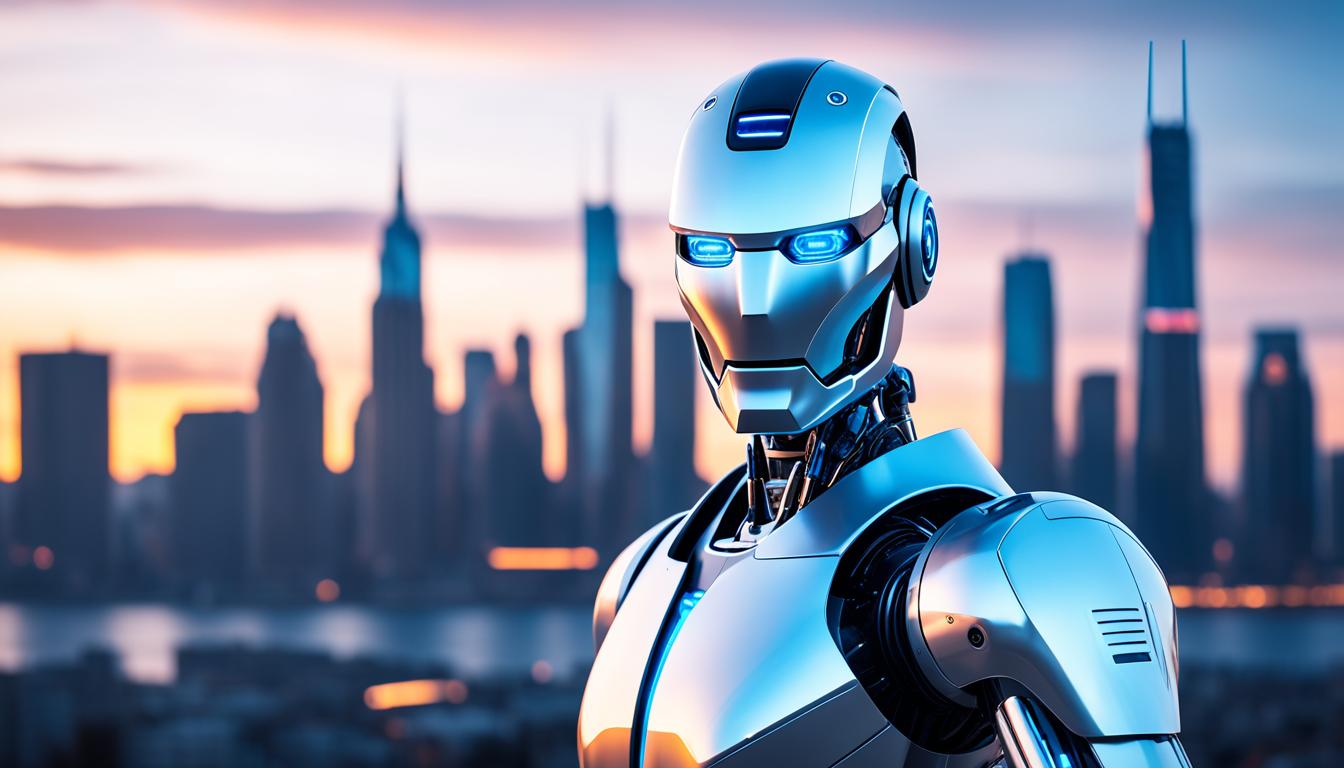
Artificial intelligence (AI) is at the forefront of technological innovation, revolutionizing industries and paving the way for a better future. As one of the most promising emerging technologies, AI is driving advancements in big data, robotics, and the Internet of Things (IoT).
From ChatGPT to AI art generators, the applications of AI are capturing mainstream attention and transforming the way we live and work. Companies worldwide are recognizing the immense potential of AI and are investing heavily in its development. In fact, approximately 44% of companies are planning significant investments in AI to stay ahead of the curve.
IBM, a technological innovator, has recently demonstrated its commitment to AI with an impressive 2,300 AI-related patents received in 2021 alone. This underscores the significant progress AI has made since its initial success in 1951. Today, AI empowers computers to process massive amounts of data and make optimal decisions in a fraction of the time taken by humans.
The impact of AI is already evident across various industries. In transportation, self-driving cars and AI travel planners are set to revolutionize the way we travel. Manufacturing has significantly benefited from AI, with AI-enabled robotic arms and predictive analysis sensors improving efficiency and productivity. Healthcare is another domain where AI is making a transformative impact, aiding disease identification, drug discovery, and patient monitoring.
In education, AI is being utilized to digitize textbooks, detect plagiarism, and personalize learning experiences. Even journalism is embracing AI, with automated writing tools generating thousands of stories efficiently. Furthermore, AI-powered customer service tools such as virtual assistants and chatbots are enhancing the customer experience and streamlining communication.
While AI brings immense opportunities, it also presents challenges. Job displacement is a concern, particularly for individuals in industries with routine and repetitive tasks that are at risk of automation. To address these challenges, it is crucial to invest in education and provide retraining opportunities to equip individuals with the skills needed for the evolving job landscape.
Additionally, ongoing research in AI explores fascinating frontiers, from embodied AI to the development of deeper understanding systems. However, the rise of AI also raises concerns about malicious AI behavior and cybersecurity risks, emphasizing the need for regulation and oversight.
In conclusion, AI is propelling us into a new era of possibilities, from generative AI to mixed reality experiences. By embracing AI and other emerging technologies, we can shape a future that is both innovative and inclusive, ensuring access to the benefits of AI for all.
Key Takeaways:
- AI is driving technological innovation in various industries
- Companies worldwide are investing significantly in AI development
- AI impacts transportation, manufacturing, healthcare, education, and journalism
- Job displacement is a challenge that can be mitigated through education and retraining
- Research in AI continues to push boundaries while cybersecurity remains a concern
The Impact of AI on Industries
Artificial intelligence (AI) is revolutionizing various industries, driving innovation and transforming the way we work and live. Let’s explore how AI is making a significant impact in transportation, manufacturing, healthcare, education, media, and customer service.
Transportation
In the transportation sector, AI is set to revolutionize travel by introducing self-driving cars and AI travel planners. Self-driving cars have the potential to enhance road safety, reduce traffic congestion, and provide a more convenient commuting experience. AI travel planners leverage intelligent algorithms and real-time data to optimize route planning, reducing travel time and improving efficiency.
Manufacturing
Manufacturing has been benefiting from AI for years, with technology advancements transforming production processes. AI-enabled robotic arms streamline manufacturing operations, increasing productivity and precision. Predictive analysis sensors leverage AI algorithms to detect anomalies, optimize maintenance schedules, and minimize downtime. These AI-powered solutions contribute to improved efficiency and cost-effectiveness in manufacturing.
Healthcare
The healthcare industry is experiencing a significant impact from AI. AI systems aid in disease identification, drug discovery, and patient monitoring. Machine learning algorithms analyze medical data, helping healthcare professionals diagnose diseases accurately and detect patterns that may be missed by human evaluation. AI also plays a crucial role in personalized healthcare by tailoring treatment plans and interventions based on individual patient data.
Education
AI is transforming education by digitizing textbooks, personalizing learning experiences, and streamlining administrative tasks. AI-powered platforms digitize textbooks, making educational resources more accessible and interactive. Machine learning algorithms analyze student data, providing personalized recommendations and adaptive learning paths. AI-powered plagiarism detectors ensure academic integrity, while chatbots and virtual assistants provide instant support to both students and educators.
Media
AI is reshaping the media landscape, empowering journalists, content creators, and publishers. Automated writing tools, powered by AI, generate thousands of stories efficiently, saving time and resources. AI algorithms analyze vast amounts of data, enabling targeted content recommendations and personalized user experiences. Natural language processing allows for real-time sentiment analysis and social media monitoring, providing valuable insights for media organizations.
Customer Service
Customer service is being revolutionized by the use of AI-powered tools like chatbots and virtual assistants. These solutions offer round-the-clock support, resolving common customer queries and providing personalized recommendations. Chatbots can handle multiple customer interactions simultaneously, offering immediate responses and enhancing customer satisfaction. Virtual assistants leverage natural language processing to understand customer needs and provide tailored assistance, improving the overall customer experience.
| Industry | AI Applications |
|---|---|
| Transportation | Self-driving cars AI travel planners |
| Manufacturing | AI-enabled robotic arms Predictive analysis sensors |
| Healthcare | Disease identification Drug discovery Patient monitoring |
| Education | Digitizing textbooks Personalized learning experiences Plagiarism detection |
| Media | Automated writing tools Targeted content recommendations Sentiment analysis |
| Customer Service | Chatbots Virtual assistants |
As we can see, AI is transforming a wide range of industries, driving innovation and offering numerous benefits. From improving efficiency and productivity to enhancing customer experiences, AI is shaping the future of work and industry.
The Influence of AI on Society and Work
Artificial Intelligence (AI) is poised to bring about significant changes to society and the workforce. As AI technology advances, there is a growing concern about job displacement, education, malicious AI behavior, and cybersecurity.
Job Displacement
One of the key impacts of AI is the potential displacement of jobs. Routine and repetitive tasks that can be easily automated are particularly susceptible. This shift in the job market may pose challenges for individuals with lower income or education levels, as their roles could be at higher risk.
Education and Retraining
Investing in education and providing retraining opportunities is crucial in preparing individuals for the changing job landscape. By equipping people with the necessary skills to work alongside AI systems, they can adapt and thrive in a technology-driven workforce.
AI Research and Innovation
The field of AI research continues to push boundaries, exploring new frontiers such as embodied AI and developing deeper understanding systems. These advancements pave the way for AI to revolutionize industries and shape the future of work.
Malicious AI Behavior and Cybersecurity
As AI becomes increasingly sophisticated, the concerns surrounding malicious AI behavior and cybersecurity risks also grow. There is a need for robust regulation and oversight to address the potential misuse of AI technology and protect against cyber threats.
It is essential for society to navigate the transformative power of AI with a careful balance between harnessing its benefits and mitigating potential risks. By addressing job displacement, investing in education, promoting responsible AI research, and ensuring cybersecurity measures, we can create a future where AI benefits society as a whole.
Conclusion
As technology continues to advance, it is crucial to place long-term bets on emerging technologies that shape our future. Artificial intelligence (AI) has made remarkable strides in language, image, and video models, revolutionizing various industries. Ongoing research in embodied AI aims to build systems with a deeper understanding of the world, enabling new possibilities.
The convergence of AI and mixed reality is unlocking a new era of immersive experiences. The metaverse, where virtual and physical worlds seamlessly blend, holds immense potential. By making these technologies accessible to as many people as possible, we can create a more inclusive future where anyone can participate in the digital world.
The journey towards the future is driven by continuous investment in technology. Long-term technological bets on AI, the metaverse, and mixed reality have already yielded significant results. In 2023, generative AI, mixed reality, and smart glasses have become available to millions, signaling an exciting time for innovation.
The pace of technological advancement shows no signs of slowing down. Future technologies will continue to shape our lives, redefine industries, and open up new possibilities. By embracing these transformative technologies, we can create a better tomorrow for all.
FAQ
What is artificial intelligence (AI)?
Artificial intelligence (AI) refers to the simulation of human intelligence in machines that are programmed to think and learn like humans. It is a rapidly developing technology that enables computers to perform tasks that typically require human intelligence, such as visual perception, speech recognition, decision-making, and problem-solving.
How is AI shaping the future?
AI is reshaping the future by driving emerging technologies such as big data, robotics, and the Internet of Things (IoT). It is transforming various industries and enabling advancements in areas like transportation, manufacturing, healthcare, education, media, and customer service.
What are some examples of AI in different industries?
In transportation, AI is being used to develop self-driving cars and travel planners. In manufacturing, AI is improving efficiency through AI-enabled robotic arms and predictive analysis sensors. In healthcare, AI is assisting with disease identification, drug discovery, and patient monitoring. In education, AI is being used to digitize textbooks, detect plagiarism, and personalize learning. In media, AI is automating the writing process. In customer service, AI tools like chatbots and virtual assistants are enhancing the customer experience.
What impact does AI have on the job market?
AI has the potential to disrupt the job market by automating routine and repetitive tasks. This may result in job displacement, particularly for roles that can be automated. However, it also creates opportunities for new jobs that are focused on AI development, implementation, and maintenance. It is important to invest in education and provide retraining opportunities to help individuals adapt to the changing job landscape.
What are the concerns surrounding AI?
The rise of AI brings concerns about malicious behavior and cybersecurity risks. As AI becomes more powerful, there is a need for regulation and oversight to ensure ethical use and prevent misuse. Additionally, there are concerns about privacy, bias, and the potential impact of AI on society. Ongoing research in AI aims to address these concerns and develop systems that are safe, transparent, and accountable.
What are the long-term bets on emerging technologies like AI?
Long-term bets on emerging technologies like AI and the metaverse are becoming increasingly important. AI has shown significant progress in areas such as language, image, and video models. Ongoing research in embodied AI aims to build systems that have a deeper understanding of the world. The intersection of AI and mixed reality is paving the way for new and immersive experiences. Continued investment in future technologies will shape the innovation of the coming decade.